April 14, 2026

Career‑Focused Women: Balancing Reproductive Health with a Busy Lifestyle

Blog Image

Why Reproductive Health Matters in the Modern Workplace

Approximately 10 % of reproductive‑age people assigned female at birth live with endometriosis or adenomyosis, and menstrual disorders affect 40‑70 % of women. These conditions generate severe pelvic pain, migraines, fatigue, and brain fog that translate into higher absenteeism, presenteeism, and stalled career progression. Qualitative interviews with employed women reveal that symptom‑related sick‑leave quickly depletes paid leave, prompting many to cut hours or leave jobs altogether. Employer actions can reverse this trend: flexible schedules, work‑from‑home options, and dedicated paid reproductive‑health leave (covering IVF, surgery, and menstrual‑related needs) preserve personal‑life balance and keep talent in the workforce. Workplace education that builds trust and reduces stigma, combined with policies that guarantee reasonable adjustments, not only improves individual wellbeing but also boosts overall productivity and reduces the economic burden of untreated reproductive health issues.

Workplace Challenges and Evidence‑Based Solutions

![Key Issue Statistics / Facts Impact on Women Recommended Workplace Solutions
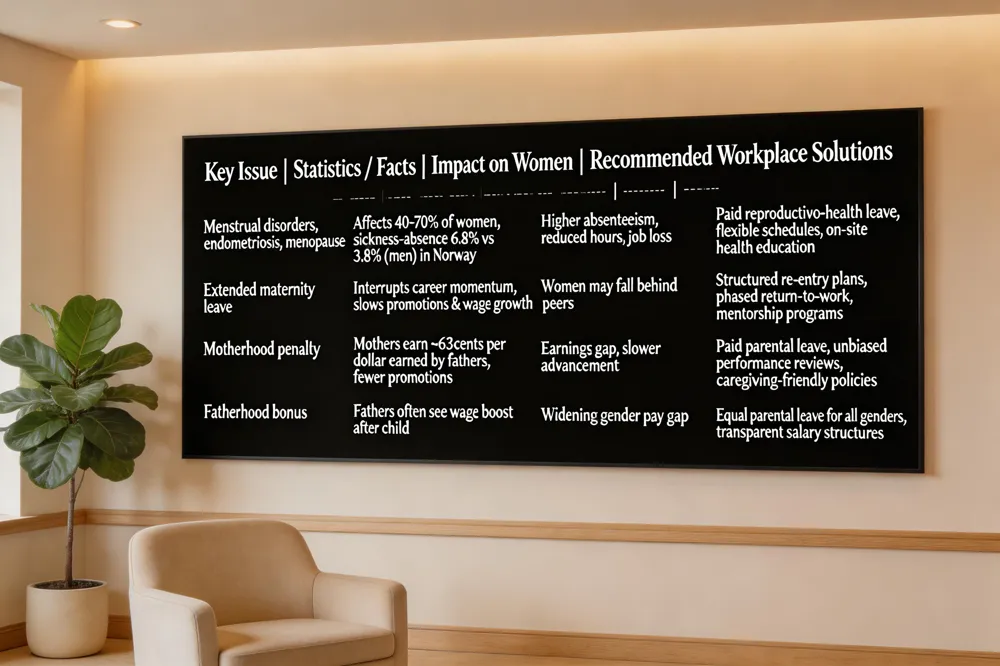
Menstrual disorders, endometriosis, menopause Affects 40‑70 % of women; sickness‑absence 6.8 % vs 3.8 % (men) in Norway Higher absenteeism, reduced hours, job loss Paid reproductive‑health leave, flexible schedules, on‑site health education
Extended maternity leave Interrupts career momentum, slows promotions & wage growth Women may fall behind peers Structured re‑entry plans, phased return‑to‑work, mentorship programs
Motherhood penalty Mothers earn ~63 cents per dollar earned by fathers; fewer promotions Earnings gap, slower advancement Paid parental leave, unbiased performance reviews, caregiving‑friendly policies
Fatherhood bonus Fathers often see wage boost after child Widening gender pay gap Equal parental leave for all genders, transparent salary structures](https://rank-ai-generated-images.s3-us-east-2.amazonaws.com/041a26cd-4a38-44ba-9f43-44d89ff8d152-banner-9b167c0e-6a22-445e-8018-bffa3aee9fc1.webp)

Women’s sickness‑absence rates are markedly higher than men’s—6.8 % versus 3.8 % in Norway—driven largely by menstrual disorders, endometriosis, and menopause symptoms that affect 40‑70 % of women. Qualitative interviews with 12 employed women with endometriosis and infertility revealed that pain, fatigue, and treatment appointments quickly exhaust paid sick‑leave, forcing many to reduce hours or leave jobs altogether.

Impact of maternity leave on career – Extended maternity leave can interrupt career momentum, slowing promotions and wage growth. When employers treat leave as a brief interlude and provide structured re‑entry plans, women are more likely to stay on their career trajectory.

The motherhood penalty – Mothers earn about 63 cents for every dollar earned by fathers and face fewer promotion opportunities. Contributing factors include reduced work hours, caregiving interruptions, and bias. Paid parental leave and flexible schedules can reduce this penalty.

Motherhood penalty vs. fatherhood bonus – While motherhood often reduces earnings and advancement, fathers may experience a wage boost after a child. This widening gender gap highlights the need for equitable policies such as paid reproductive‑health leave, flexible arrangements, and employer‑provided education to support women’s health and career progression.

Practical Health Tips for the Busy Professional Woman

![Category Recommendation Frequency / Duration Quick Implementation Tip
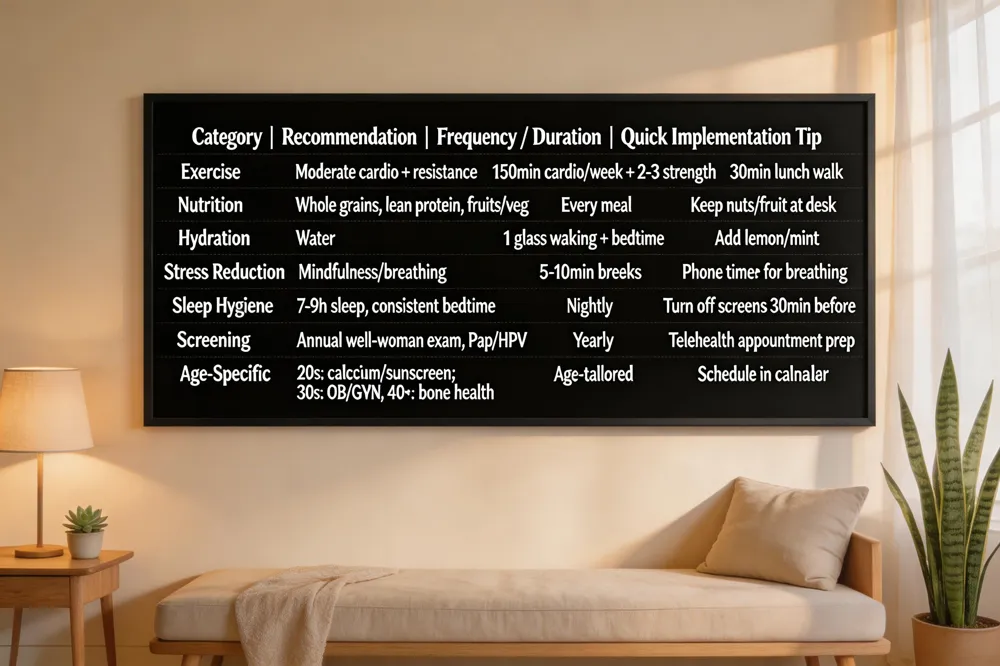
Exercise Moderate‑intensity cardio + resistance training 150 min cardio/week + 2‑3 strength sessions 30‑min brisk walk during lunch
Nutrition Whole grains, lean protein, omega‑3s, fruits, veg Every meal Keep nuts & fruit at desk
Hydration Water intake 1 glass on waking + before bed Add lemon/mint for flavor
Stress reduction Mindfulness / deep‑breathing 5‑10 min breaks, 2‑3x/week yoga Use phone timer for breathing
Sleep hygiene 7‑9 h sleep, consistent bedtime, dark cool room Nightly Turn off screens 30 min before sleep
Screening Annual well‑woman exam, Pap/HPV, mammogram (40+), bone density Yearly (or per guideline) Use telehealth for appointment prep
Age‑specific tips 20s: calcium, cardio+strength, sunscreen; 30s: OB/GYN, folic acid; 40+: bone health, menopause review Tailored to age Schedule age‑appropriate checks in calendar](https://rank-ai-generated-images.s3-us-east-2.amazonaws.com/041a26cd-4a38-44ba-9f43-44d89ff8d152-banner-d0c7094c-a4eb-43e8-8ea9-1f279bdc9bac.webp)

Efficient Exercise & Nutrition

  • Aim for 150 min of moderate‑intensity cardio per week (e.g., brisk walking, interval training) plus 2‑3 resistance sessions; even a 30‑minute routine fits a tight schedule.
  • Fill the plate with whole grains, lean protein, fruits, vegetables, and omega‑3‑rich foods; keep healthy snacks (nuts, seeds, fiber‑rich fruit) on hand.
  • Stay hydrated—drink a glass of water on waking and before bed; add lemon or mint for flavor.

Stress Reduction & Sleep Hygiene

  • Take short mindfulness or deep‑breathing breaks (5‑10 min) during the day; regular yoga or meditation lowers cortisol and improves menstrual regularity.
  • Prioritize 7‑9 hours of sleep; set a consistent bedtime, limit screens 30 min before sleep, and create a dark, cool environment. -- setting the, tap notifications and limit social‑media checks to once or twice daily.

Screening & Preventive Care

  • Schedule an annual well‑woman exam (pelvic exam, Pap smear, HPV test) and additional visits for menstrual or fertility concerns.
  • Women over 40 should add mammograms, bone‑density scans, and menopause symptom reviews.
  • Use flexible clinic hours, telehealth, or walk‑in services to fit appointments into a busy workday.

Quick Answers to Common Questions

  • Health tips for young ladies: balanced whole‑food diet, hydration, 30 min daily exercise, sunscreen, 7‑9 h sleep, routine check‑ups.
  • Women in their 20s: calcium‑rich foods, cardio + strength, annual wellness exams, mental‑health care, sunscreen.
  • Women over 40: combine cardio + resistance, calcium + vit DD mammograms, Pap smears, bone‑density checks, mindfulness.
  • 30‑year‑old: regular OB/GYN visits, strength + cardio, plant‑rich diet, limit alcohol, 7‑9 h sleep, stress management, daily folic acid.
  • Female reproductive health: balanced diet, healthy weight, exercise, avoid smoking/alcohol, routine screenings, stress & sleep management.
  • Lifestyle & fertility: healthy weight, nutrient‑dense diet, moderate exercise, stress‑reduction, toxin avoidance; partner with a women‑led OB/GYN for personalized plans.
  • How lifestyle influences reproductive health: nutrition, weight, activity, stress, sleep, and toxin exposure affect hormone balance, ovulation, and egg quality.
  • Can a OB‑GYN check lymph nodes?: Yes—palpation of neck, axillary, and inguinal nodes is part of a well‑woman exam.
  • Is women’s health the same as OB‑GYN?: No—women’s health includes preventive care, chronic disease, mental health, nutrition, and lifestyle; OB/GYN focuses on obstetrics and gynecology.
  • Why focus on women’s health?: Gender‑specific disease patterns (e.g., maternal mortality, reproductive cancers) require dedicated attention to reduce morbidity.
  • How to promote reproductive health: nutrient‑dense diet, hydration, healthy weight, stress management, avoid harmful substances, routine gynecologic exams, women‑led provider partnership.
  • 10 lifestyle tips: plant‑rich diet, regular activity, adequate sleep, stress management, hydration, avoid tobacco/alcohol, up‑to‑date vaccinations/screenings, multivitamins if needed, safe habits, professional mental‑health support.
  • Three ways to maintain good reproductive health: regular physical activity, nutrient‑rich balanced diet, adequate sleep/hydration, stress management.

Finding the Right Women‑Led OB/GYN in Queens

![Clinic / Provider Female Leadership Core Services Scheduling Flexibility
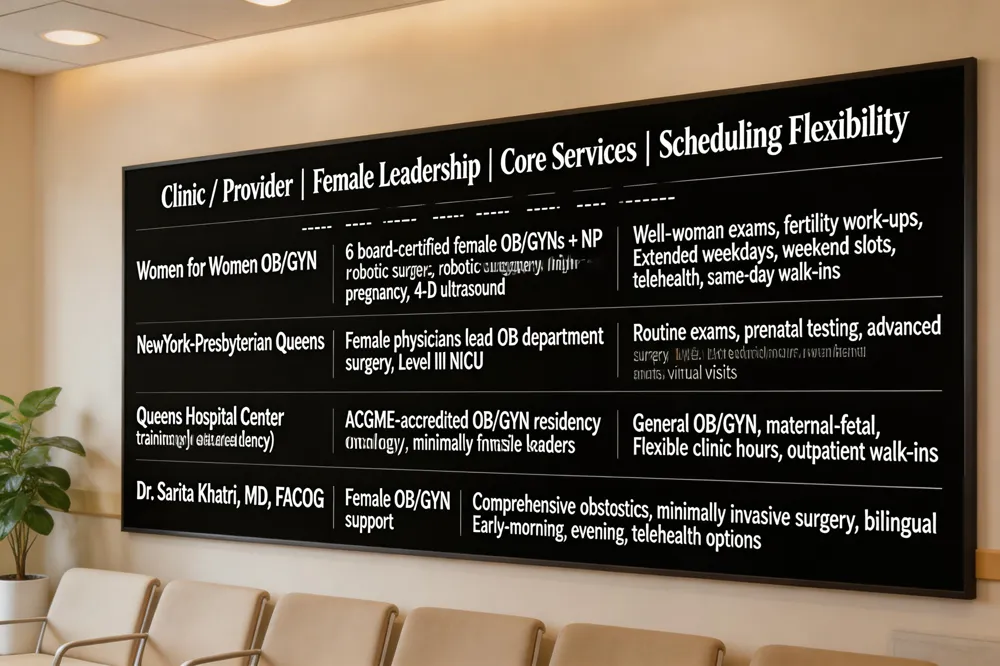
Women for Women OB/GYN 6 board‑certified female OB/GYNs + NP Well‑woman exams, fertility work‑ups, robotic surgery, high‑risk pregnancy, 4‑D ultrasound Extended weekdays, weekend slots, telehealth, same‑day walk‑ins
NewYork‑Presbyterian Queens Female physicians lead OB department Routine exams, prenatal testing, advanced surgery, Level III NICU Extended hours, weekend appointments, virtual visits
Queens Hospital Center (Residency) ACGME‑accredited OB/GYN residency training female leaders General OB/GYN, maternal‑fetal, oncology, minimally invasive surgery Flexible clinic hours, outpatient walk‑ins
Dr. Sarita Khatri, MD, FACOG Female OB/GYN Comprehensive obstetrics, minimally invasive surgery, bilingual support Early‑morning, evening, telehealth options](https://rank-ai-generated-images.s3-us-east-2.amazonaws.com/041a26cd-4a38-44ba-9f43-44d89ff8d152-banner-6f3ce3d3-ec24-4a3f-8974-34197e944873.webp)

Choosing a woman‑led practice can make a big difference in comfort, communication, and continuity of care. In Queens, several top‑rated clinics are staffed entirely by board‑certified female OB/GYNs who understand the unique health concerns of career‑focused women.

Provider credentials and female leadership – Practices such as Women for Women OB/GYN (six board‑certified women physicians and a nurse practitioner) and NewYork‑Presbyterian Queens (board‑certified OBs led by female physicians) prioritize gender‑congruent care. The Queens Hospital Center also hosts an ACGME‑accredited OB‑GYN residency, training the next generation of female leaders.

Range of services – From routine annual well‑woman exams, Pap smears, and family‑planning counseling to advanced fertility work‑ups, minimally invasive robotic surgery for endometriosis or fibroids, high‑risk pregnancy management, and 4‑D ultrasounds, these clinics cover the full reproductive lifespan.

Convenient locations and flexible scheduling – Most offices offer extended weekday hours, weekend slots, and telehealth visits, allowing busy professionals to fit appointments into early‑morning, lunchtime, or evening windows. Same‑day and walk‑in services further reduce time away from work.

Key answers

  • OBGYN Queens NY – Our women‑led practice in Queens delivers comprehensive obstetrics and gynecology care, from routine exams to advanced fertility services, specializing in endometriosis, fibroids, and menopause.
  • Female gynecologist Queens, NY – Women for Women OB/GYN provides board‑certified female physicians, offering routine exams, high‑risk pregnancy care, minimally invasive surgery, and 4‑D ultrasounds.
  • Best female gynecologist Queens, NY – Women for Women OB/GYN LLC is recognized as the top female‑led practice, with six board‑certified OB/GYNs and a nurse practitioner delivering care from puberty through menopause.
  • Best OBGYN in Queens, NY – Dr. Sarita Khatri, MD, FACOG, offers comprehensive obstetric and gynecologic care, minimally invasive surgery, and bilingual support.
  • Queens Hospital OBGYN residency – Hosts an ACGME‑accredited residency affiliated with Mount Sinai, covering general, maternal‑fetal, oncology, and minimally invasive surgery.
  • NYP OB GYN Queens – NewYork‑Presbyterian Queens provides routine exams, prenatal testing, high‑risk pregnancy management, advanced robotic surgery, and a Level III NICU.

Policy Changes and Workplace Benefits That Work

![Policy Description Expected Benefits Implementation Example
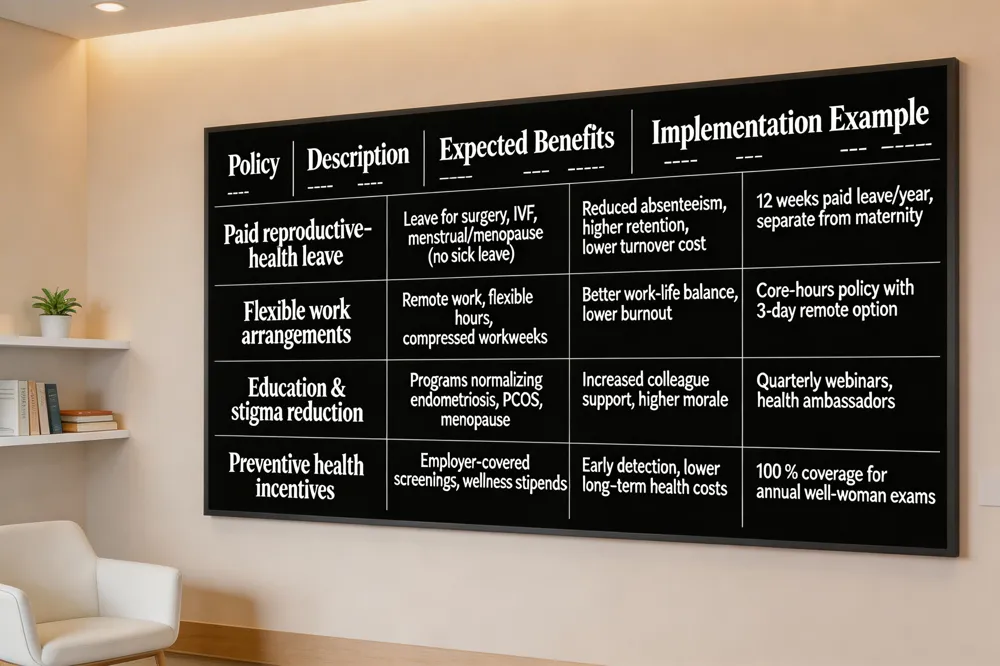
Paid reproductive‑health leave Leave for surgery, IVF, menstrual issues, menopause without using sick leave Reduced absenteeism, higher retention, lower turnover cost 12 weeks paid leave per year, separate from maternity
Flexible work arrangements Remote work, flexible hours, compressed workweeks Better work‑life balance, lower burnout Core‑hours policy with 3‑day remote option
Education & stigma reduction Programs normalizing endometriosis, PCOS, menopause Increased colleague support, higher morale Quarterly webinars, health ambassadors
Preventive health incentives Employer‑covered screenings, wellness stipends Early detection, lower long‑term health costs 100 % coverage for annual well‑woman exams](https://rank-ai-generated-images.s3-us-east-2.amazonaws.com/041a26cd-4a38-44ba-9f43-44d89ff8d152-banner-9dcad368-ad2e-46c1-a7ec-dda15ed91ad5.webp)

Paid reproductive‑health leave and flexible work‑arrangement rights give women the time they need for surgery, IVF, menstrual‑related issues, and maternity without depleting annual or sick leave. When employers pair these policies with education programs that normalize conditions such as endometriosis, PCOS, and menopause, stigma falls and colleagues become more supportive, improving workplace morale. Untreated reproductive health problems cost economies billions in absenteeism and reduced productivity; a UK report estimated £11 billion lost annually, while men’s health‑related gaps are far smaller.

Health tips for heart and body: adopt a heart‑healthy diet, engage in at least 150 minutes of moderate aerobic activity weekly, incorporate strength training, manage stress, and schedule regular preventive screenings.

Impact of maternity leave on career: leave can interrupt career trajectory, often leading to fewer promotions and lower salary growth; supportive policies and flexible re‑entry plans help mitigate these effects.

The motherhood penalty: mothers earn less and face slower advancement due to bias, reduced work hours, and caregiving interruptions. Paid parental leave, flexible scheduling, and unbiased evaluation practices can reduce the penalty.

Motherhood penalty vs fatherhood bonus: motherhood usually reduces earnings, while fatherhood often brings a wage increase, widening the gender pay gap and highlighting the need for equitable workplace policies.

Three ways to maintain good reproductive health: 1) regular physical activity, 2) nutrient‑rich balanced diet, 3) adequate sleep, hydration, and stress management.

Putting It All Together: A Roadmap for Career‑Focused Women

Balancing a demanding career with reproductive health is doable when you weave evidence‑based habits into your daily routine. Schedule short movement breaks, 30 minutes of moderate‑intensity exercise most days, and prioritize 7‑9 hours of sleep to keep cortisol in check and support menstrual regularity (CDC, ACOG). Use a balanced, nutrient‑rich diet—whole grains, lean protein, omega‑3s, iron, and folic acid—to stabilize hormones and reduce PMS or migraine triggers (Henry Ford Health).

Queens offers a concentration of women‑led OB/GYN practices (e.g., NewYork‑Presbyterian Queens, Mount Sinai, Women for Women OB/GYN) that provide flexible hours, telehealth visits, and minimally invasive procedures, allowing you to attend appointments before or after work without prolonged recovery (UCLA Health, Mount Sinai).

Advocate for workplace policies that recognize reproductive health: request flexible scheduling, remote‑work options, and a dedicated paid reproductive‑health leave for IVF, surgeries, or menstrual‑related care. Employers that adopt these accommodations see lower absenteeism, higher retention, and improved productivity (RCN, Center for American Progress). By integrating wellness habits, leveraging women‑focused care, and championing supportive policies, you can protect your health while advancing your career.