
Making Your Birth Control Visit Work for You
What to Discuss During a Birth Control Consultation
Making Your Birth Control Visit Work for You
Follow us here:


Good nutrition begins before a woman even knows she is pregnant and continues through every week of gestation. The most critical micronutrients are folic acid (400‑600 µg daily), iron (27 mg), calcium (1,000 mg), vitamin D (600 IU), and DHA (200‑300 mg). Together they protect against neural‑tube defects, anemia, bone loss, and support fetal brain and eye development. Energy needs rise modestly: no extra calories in the first trimester, about 340 kcal per day in the second, and roughly 450 kcal in the third. A prenatal multivitamin supplies the above nutrients when food alone falls short, especially for folic acid and iron. Adequate hydration (8‑12 cups water daily), safe food handling, limited caffeine, and avoidance of alcohol, unpasteurized dairy and high‑mercury fish are also essential for maternal and fetal health.
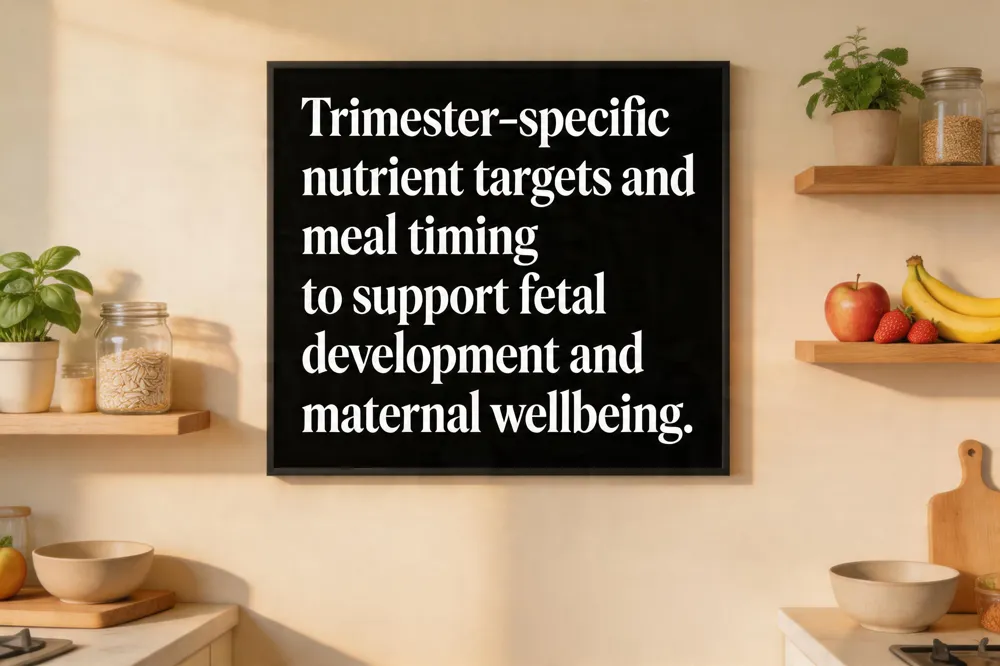
First‑trimester: Emphasize folate‑rich foods (dark leafy greens, beans, fortified cereals, citrus) to reach 600 µg daily and prevent neural‑tube defects; add calcium from low‑fat dairy or fortified plant milks and protein from poultry, eggs, and low‑mercury fish. Small, frequent meals help ease nausea.
Second‑trimester: Add ~300 extra kcal with whole grains, starchy vegetables, nuts, and avocados. Boost iron to 27 mg using lean red meat, lentils, spinach and pair with vitamin‑C‑rich fruit for better absorption. Continue calcium and vitamin D intake.
Third‑trimester: Focus on 71 g protein, calcium (1 000 mg) from dairy or fortified alternatives, and DHA‑rich sources like salmon, sardines, or fortified eggs for brain development. Add ~450 kcal if needed.
Hydration & caffeine: Aim for 8‑12 cups water daily; limit caffeine to <200 mg.
Safety: Avoid high‑mercury fish, unpasteurized dairy, raw/undercooked seafood, eggs, and deli meats unless heated. Take a prenatal vitamin covering folic acid, iron, calcium, vitamin‑D, and DHA to fill any gaps.

During weeks 1‑12 a pregnant woman needs roughly 1,800‑2,000 kcal per day, focusing on nutrient‑dense foods rather than extra calories. Aim for 2‑3 servings of low‑fat dairy or fortified soy milk for calcium and vitamin D, 5‑6 servings of non‑starchy vegetables (leafy greens, broccoli, carrots, peppers) for folate and fiber, and 2‑3 servings of whole‑grain breads, brown rice, or starchy vegetables for energy and B‑vitamins. Include 2‑3 protein portions daily—lean meat, poultry, low‑mercury fish, eggs, tofu, or legumes—to meet the 27 mg iron requirement and support fetal growth; a handful of nuts or avocado supplies omega‑3 fats. Sample Indian‑style meals: moong‑dal chilla for breakfast, lentil dal with brown rice for lunch, and paneer‑vegetable stir‑fry for dinner, plus fruit, nuts, and buttermilk snacks. A printable PDF chart (link) summarizes these portions and can be downloaded for easy reference.
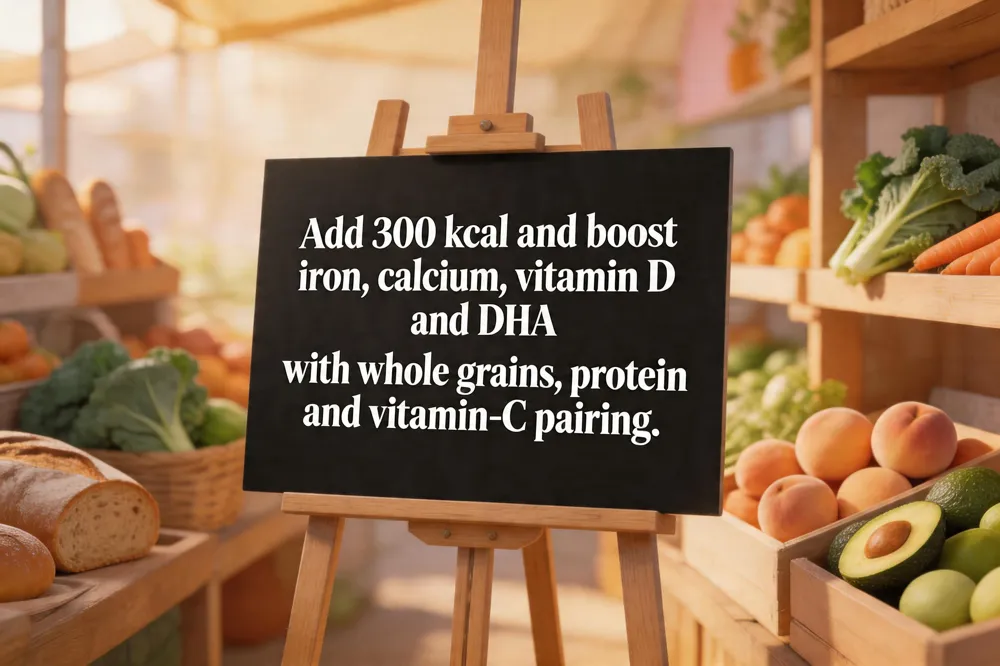
During the second trimester you need about 300 kcal extra each day, split among protein (≈71 g), calcium (1 000 mg), iron (27 mg), vitamin D (600 IU) and DHA (200‑300 mg). A typical day might start with fortified whole‑grain toast, avocado, a boiled egg and low‑fat milk; a mid‑morning snack of mixed nuts and fruit; lunch of grilled salmon or lentils with quinoa, broccoli and a leafy‑green salad; an afternoon Greek‑yogurt snack with chia seeds; and dinner of roasted chicken or tofu, sweet potato and sautéed greens. Pair iron‑rich foods (red meat, beans, fortified cereals) with vitamin C sources (citrus, strawberries) to boost absorption. Calcium‑fortified orange juice can inhibit iron uptake, so keep them separate. Calcium can inhibit iron absorption, so avoid calcium‑fortified orange juice when taking iron supplements. Avoid high‑mercury fish, raw or undercooked seafood/meat/eggs, unpasteurized dairy, soft cheeses, deli meats unless heated, and limit caffeine to ≤200 mg. Aim for steady weight gain (≈0.5 lb/week) by controlling portion sizes—half the plate vegetables/fruits, a quarter whole grains, a quarter protein, plus a dairy serving.

Your health is our priority. We offer a free downloadable PDF that outlines a complete nutrition plan for pregnancy and lactation, including daily food‑group goals, key micronutrients (600 µg folic acid, 27 mg iron, 1,000 mg calcium, 600 IU vitamin D, iodine, DHA) and safe portion sizes. The guide also lists foods to avoid—high‑mercury fish, raw or undercooked meat, eggs, unpasteurized dairy, deli meats not heated, and raw sprouts—and tips for managing nausea with small, frequent bland meals, ginger, and proper hydration (≈9 glasses water daily). The “golden rule” for every pregnant woman is to prioritize physical and emotional well‑being: listen to your body, rest, stay hydrated, take a prenatal vitamin, and avoid harmful substances. Download the PDF on our website or request a printed copy at your Queens, NY appointment.

A simple daily meal schedule can keep you on track: start with a nutrient‑dense breakfast (e.g., fortified cereal, low‑fat yogurt, berries), a mid‑morning snack of a piece of fruit or a handful of nuts, a balanced lunch with lean protein, whole‑grain bread, and plenty of vegetables, an afternoon snack of hummus with raw carrots, and a dinner that includes a protein source (fish, poultry, beans), a calcium‑rich side (milk, fortified soy milk, or leafy greens), and a whole‑grain or starchy vegetable. Record your weight and calories each day in a phone app or notebook; aim for the extra 300 kcal after the first trimester and adjust as you gain weight. Hydration best practices include drinking 8–12 cups of water daily, sipping between meals, and limiting caffeine and sugary drinks. Always discuss your plan with a women‑health provider to personalize micronutrient needs and safe supplementation.
What to eat during pregnancy to have a beautiful baby? A balanced pregnancy diet rich in folate (dark‑green leafy vegetables, citrus, fortified cereals), calcium and vitamin D (dairy, fortified orange juice, leafy greens), lean protein (fish, poultry, eggs, beans, nuts), and whole‑grain carbs provides the building blocks for strong bones, healthy skin, and bright eyes. Pair plant‑based iron sources with vitamin C foods to boost absorption and stay hydrated.
Nutritional needs during pregnancy and lactation: During pregnancy add ~300 kcal daily, focusing on lean protein, whole grains, fruits, vegetables, and low‑fat dairy. Key micronutrients are folic acid (400 µg), iron (27 mg), calcium (1,000 mg), vitamin D (600 IU), iodine, and choline. In lactation, increase calories by 330–400 kcal and raise iodine and choline intakes to support milk quality. Continue a prenatal‑type multivitamin, stay well‑hydrated, limit caffeine, avoid high‑mercury fish, raw/undercooked animal foods, and unpasteurized dairy, and follow up regularly with your health provider.
During the first trimester focus on folate (400‑600 µg), small frequent meals, and staying hydrated to ease morning sickness. In the second trimester add about 340 extra calories daily, prioritize protein (≈71 g), calcium (1,000 mg), vitamin D (600 IU) and iron (27 mg) while pairing plant‑iron foods with vitamin C for better absorption. The third trimester requires roughly 450 extra calories, continued calcium and vitamin D for bone mineralization, fiber‑rich whole grains to prevent constipation, and omega‑3 DHA from low‑mercury fish for brain development. A daily prenatal vitamin containing folic acid, iron, calcium, and vitamin D fills any dietary gaps, and ample water (8‑12 cups) supports blood volume and amniotic fluid. Schedule a personalized nutrition consultation to tailor these guidelines to your unique needs and ensure a thriving pregnancy.

.png)
%201.png)
Compassionate care for every stage of womanhood. Visit one of our convenient locations or book your appointment online today.