Your Guide to Fertility Preservation: Options, Timelines, and What to Expect
Understanding Your Fertility Preservation Options
Your Guide to Fertility Preservation: Options, Timelines, and What to Expect
Follow us here:


Endometrial ablation destroys the uterine lining to stop heavy menstrual bleeding. Originally done in operating rooms under general anesthesia, modern devices (NovaSure, Minerva, hydrothermal, etc.) allow the procedure to be performed safely in a physician’s office with local anesthesia and minimal sedation. For Queens women, this means discharge, lower cost, no overnight hospital stay, and a quick return to work—making effective bleeding control accessible, convenient, and sensitive in a community.
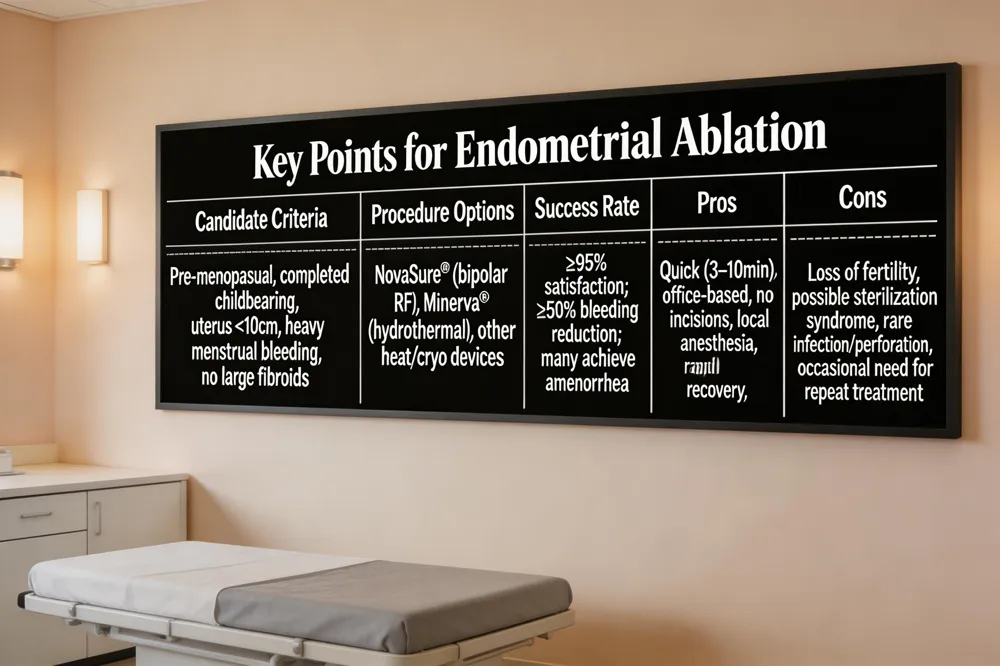 Endometrial ablation is an invasive, office‑based procedure that destroys the uterine lining to treat heavy menstrual bleeding. A device delivers heat, radio‑frequency, hot water, or cryotherapy in 3–10 minutes. Ideal candidates are pre‑menopausal women who have completed childbearing, have heavy bleeding, and a uterus under 10 cm without large fibroids. NovaSure® and Minerva® are used.
Side effects include cramping, spotting or pink discharge for days; infection or perforation may occur. Up to 95 % report satisfaction, with patients achieving ≥ 50 % bleeding reduction and attaining amenorrhea. Complications include sterilization syndrome or cancer detection.
Are you put to sleep? Most receive local anesthesia or a paracervical block with optional mild sedation; general anesthesia is not used. Ablation follows ACOG checklists and ASA 1–2 criteria, allowing a visit in Queens today. Pros: quick recovery, no incisions. Cons: loss of fertility. Is it permanent? The effect lasts for years, though may need further treatment. Which type is most effective? Bipolar radio‑frequency (NovaSure®) shows highest success. Can it stop periods? Women experience little to no bleeding; spotting may persist. Is it a big surgery? No – it is a small outpatient procedure without abdominal incisions.
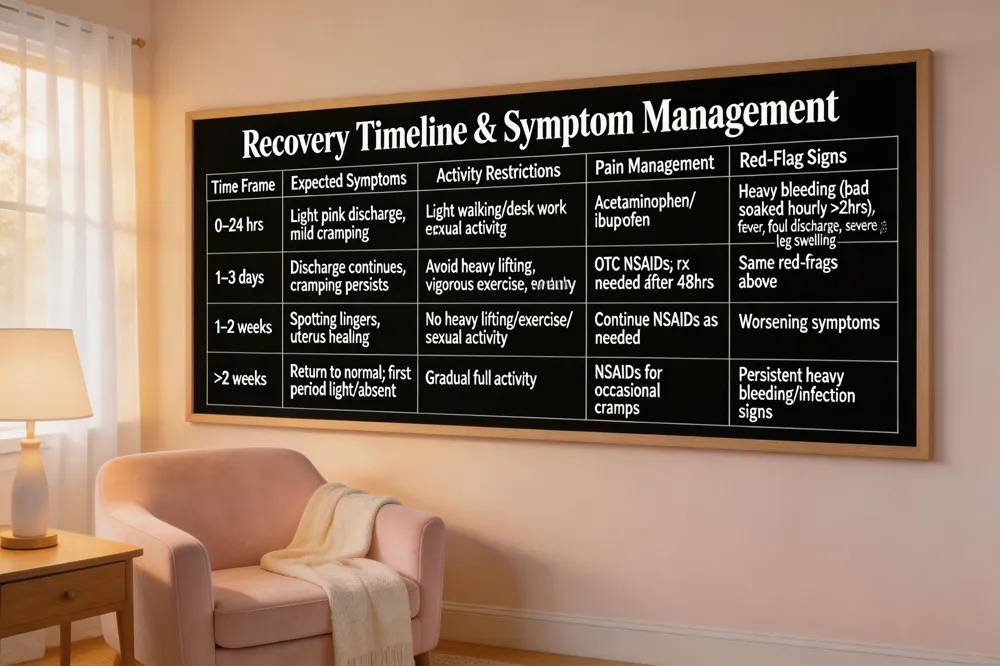 Women who undergo office‑based endometrial ablation usually go home the same day; if a short general‑anesthetic recovery period is needed, observation lasts 3‑4 hours.
Light vaginal bleeding or pink discharge can persist for a few days up to three weeks, so sanitary pads—not tampons—are recommended to lower infection risk.
Mild cramping, similar to menstrual pain, is common for the first 24‑48 hours and is well controlled with acetaminophen or ibuprofen; prescription pain medication is rarely needed beyond two days.
Activity restrictions – Heavy lifting, vigorous exercise, and sexual activity should be avoided for 1‑2 weeks. Light walking and desk work are permissible within 24‑48 hours, and most women feel ready to return to work by the end of the first week. If a general anesthetic was used, a brief period of drowsiness may warrant an extra day of rest.
When to seek care – Call your provider if you notice heavy bleeding (soaking a pad every hour for >2 hours), fever, foul‑smelling discharge, worsening abdominal pain, or leg swelling suggestive of a clot. These can signal infection, perforation, or other complications.
Typical expectations – The first period after ablation is usually very light or absent; spotting may continue for a few weeks as the uterus heals. Full regeneration of the endometrial lining can take months to years, but most patients experience a durable reduction in menstrual flow.
Special cases – Novasure ablation follows the same timeline, with most women resuming normal activities within 24‑48 hours. Compared with laparoscopic surgery, endometrial ablation offers a quicker convalescence, often allowing a return to daily routines the day after the procedure.
 Office‑based endometrial ablation is far less expensive than a hospital‑based hysterectomy or laparoscopic ablation. In Queens, NY, a typical in‑office procedure costs between $1,176 and $2,880 when patients use discount‑program pricing, while a hospital or ambulatory surgical center can run $5,658 – $12,095 (national average ≈ $8,449). The lower price reflects the absence of an operating‑room fee, anesthesia‑team charges, and overnight stay.
Most insurers recognize the procedure as medically necessary for pre‑menopausal women with heavy menstrual bleeding who have completed childbearing and have failed hormonal therapy. The commonly billed CPT codes are 58353 (thermal endometrial ablation without hysteroscopic guidance) and 58563 (hysteroscopic endometrial ablation). When the documentation meets the American College of Obstetricians and Gynecologists’ criteria—no large fibroids, no active infection, and appropriate imaging—these codes are reimbursed under Medicare, Aetna, Cigna, and most private plans.
Out‑of‑pocket costs depend on deductible size, co‑pay structure, and whether the patient pays up‑front. Patients with high‑deductible plans may see a larger upfront bill but receive a higher insurance reimbursement later. It is advisable to request a detailed pre‑t quote the including including clinic hospitalcessione‑, and and provider will ensure‑ ton exact expenses before any procedure.
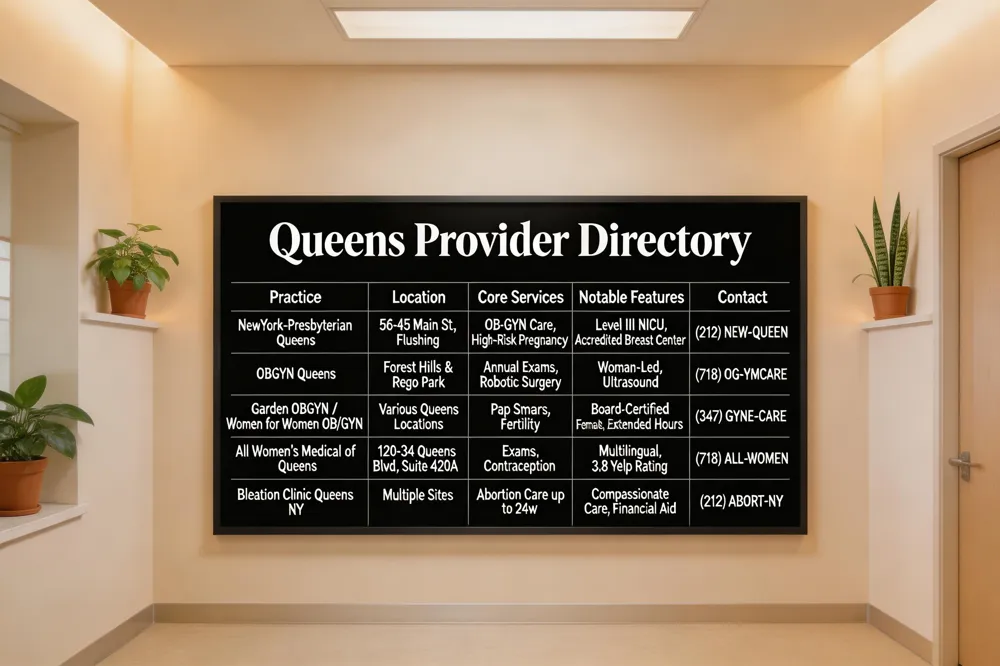 Queens offers a rich network of women‑led OB/GYN practices, hospital affiliates, and comprehensive health centers that make it easy to access high‑quality, personalized care.
NewYork‑Presbyterian Queens – Located at 56‑45 Main St. in Flushing, the campus provides routine exams, family‑planning, prenatal care, high‑risk pregnancy management, and minimally invasive surgical options. A Level III NICU, mother‑baby unit, and NAPBC‑accredited breast center support a full spectrum of women’s health needs.
OBGYN Queens – Our woman‑led practice delivers compassionate care from annual exams to advanced procedures, using state‑of‑the‑art ultrasound and robotic surgery at convenient Forest Hills and Rego Park locations.
Female Gynecologists in Queens, NY – Practices such as Garden OBGYN and Women for Women OB/GYN feature board‑certified female physicians who offer everything from pap smears to high‑risk obstetrics and minimally invasive surgery.
Best Female Gynecologist Queens, NY – Women for Women OB/GYN and Garden OBGYN are consistently praised for their patient‑centered approach, extended hours, and same‑day appointments.
All Women’s Medical of Queens Kew Gardens – A woman‑led clinic at 120‑34 Queens Blvd., Suite 420A, offering exams, STD testing, contraception, and abortion care up to 24 weeks, with financial assistance and multilingual staff.
All Women’s Medical of Queens Reviews – 3.8‑star Yelp rating highlights compassionate, knowledgeable care and a modern, welcoming environment.
Queens Hospital OBGYN Residency – Serves as a clinical site for NYP Weill Cornell’s four‑year residency, providing residents with diverse, community‑focused training.
Bleortion Clinic Queens NY – All Women’s Medical of Queens and Choices Women’s Medical Center provide medication and surgical abortions up to 24 weeks, accepting insurance and offering financial aid.
Kardashians’ Gynecologist – Dr. Thaïs Aliabadi, a media‑savvy OB‑GYN based in Beverly Hills, is known for personalized, minimally invasive care for high‑profile patients.
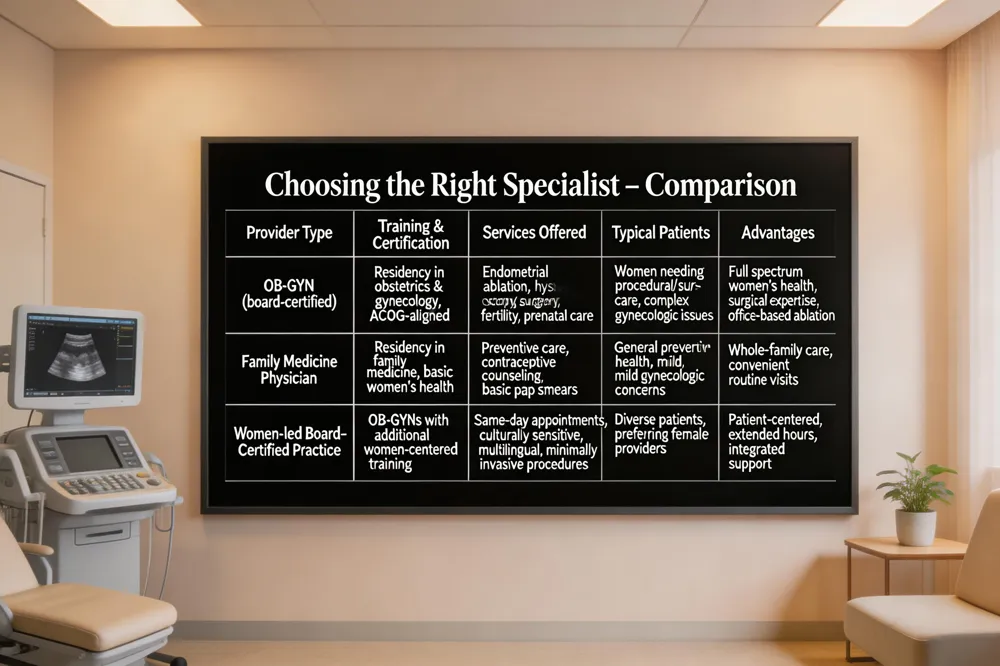 Women’s health care often raises the question, “What type of doctor is best for women’s health?” The physician most specifically trained for comprehensive women’s health is an obstetrician‑gynecologist (OB‑GYN). An OB‑GYN focuses on the female reproductive system—including breasts, uterus, ovaries and vulva—and handles menstrual disorders, fertility concerns, contraception, pregnancy, and sexual‑health issues. While family‑medicine doctors can provide general preventive care and manage chronic conditions, they lack the specialized surgical and procedural expertise that an OB‑GYN offers for gynecologic and obstetric care. For women seeking personalized, advanced care for reproductive or pregnancy‑related matters, an OB‑GYN is the optimal provider. In practice, many patients start with a primary‑care clinician and are referred to an OB‑GYN when reproductive‑specific evaluation or treatment is needed.
Differences between OB/GYN and family medicine – Family physicians treat the whole family and can address basic gynecologic concerns, but they do not perform office‑based endometrial ablation, hysteroscopy, or advanced fertility procedures. OB‑GYNs are board‑certified in both obstetrics and gynecology, allowing them to perform minimally invasive surgeries, such as office‑based endometrial ablation for heavy menstrual bleeding, and to manage complex conditions like fibroids or endometriosis.
Advantages of women‑led, board‑certified practices – A women‑led practice in Queens, NY, often offers culturally sensitive, patient‑centered care, same‑day scheduling, and a team that understands the unique needs of female patients. Board certification assures that the provider has met rigorous standards of knowledge and skill. Clinics such as Gyn Surgical Solutions, NY‑Presbyterian Queens, and Walk In GYN demonstrate how a women‑led model can combine expertise with convenience.
How to select a provider based on needs and insurance – Verify that the clinician is board‑certified and that the practice accepts your insurance plan (most cover office‑based ablation). Consider the provider’s experience with the specific treatment you need—e.g., Dr. Hutson in Queens frequently uses Minerva or NovaSure for endometrial ablation. Look for practices that offer comprehensive pre‑procedure evaluation (ultrasound, hysteroscopy) and clear post‑procedure follow‑up. Finally, assess comfort with the office environment, language support, and accessibility via public transportation, especially in a diverse borough like Queens.
Office‑based endometrial ablation offers a minimally invasive solution for heavy menstrual bleeding, delivering up to 90 % reduction in blood loss with over 95 % patient satisfaction. Performed under local anesthesia in a clinic, it avoids hospital stays and general‑anesthesia risks. Queens women can turn to women‑led practices such as Gyn Surgical Solutions or NY‑Presbyterian for care. Recovery is rapid—most resume activities within 1‑2 days and enjoy menstrual improvement for months to years.

.png)
%201.png)
Compassionate care for every stage of womanhood. Visit one of our convenient locations or book your appointment online today.