
Easing Menopause Naturally: Diet, Lifestyle, and Expert-Backed Strategies
Natural Approaches to Managing Menopause Transitions
Easing Menopause Naturally: Diet, Lifestyle, and Expert-Backed Strategies
Follow us here:



The first six weeks after birth constitute the core postpartum timeline. Most women are discharged within 24–48 hours after a vaginal birth (including a successful VBAC) and resume light housework and baby care within a few days; a repeat C‑section typically requires a 3–4‑day stay and a 4–6‑week period before lifting heavier objects or driving. By week 6 most uterine involution, lochia, and perineal healing are complete, and a routine check‑up assesses recovery. Because healing varies with health status, incision type, and birth experience, personalized, woman‑led care is essential. Tailoring pain management, activity pacing, nutrition, and emotional support to each mother’s needs promotes a safer, smoother return to daily life.

Length of stay – VBAC discharge occurs after 24‑48 hours; a repeat C‑section typically requires 2‑4 days for incision monitoring.
Initial mobilization – After VBAC, mothers sit, stand and walk within a few hours, promoting circulation. After C‑section, gentle walks start after the spinal block resolves (≈24 h) and the catheter is removed.
First‑week activity – By day 2‑3, VBAC patients can resume light housework, infant care and short walks, avoiding heavy lifting (>10 lb) until cleared. C‑section patients limit lifting and vigorous activity for 4‑6 weeks; short walks are allowed after the first day.
Answers to common questions C‑section vs vaginal delivery recovery time – Vaginal birth (including VBAC) lets women return to normal tasks within 2‑4 weeks and feel fully recovered by 6 weeks; a C‑section needs 6‑8 weeks for incision healing and has higher pain levels. Hospital stays differ (1‑2 days vs 3‑4 days).
Difference between first and second C‑section – The first operation usually uses a low‑transverse incision with lower scar risk. A second C‑section works through scar tissue, increasing adhesions, infection risk and recovery length, though pain control is similar. Providers advise an 18‑24‑month interval before the next pregnancy for uterine healing.

After a repeat cesarean section, most women experience incision‑related discomfort that peaks in the first 24–48 hours and gradually eases over the next two weeks. Over‑the‑counter NSAIDs such as ibuprofen or acetaminophen are usually sufficient for pain relief and are safe while breastfeeding. Opioids are reserved for the first few days if needed and should be tapered as soon as pain permits.
Lifting and bending guidelines – Providers typically advise limiting lifting to no more than 10 pounds (≈4 kg) for the first 4–6 weeks (https://www.babycenter.com/baby/postpartum-health/c-section-recovery_221). Light activities, such as walking, can begin within a day after delivery (https://www.babycenter.com/baby/postpartum-health/c-section-recovery_221), but heavy groceries, diaper bags, or any effort that strains the abdominal muscles should be avoided until the incision has healed and you are pain‑free. Gentle knee‑bending or shallow squats are usually safe after 2–3 weeks (https://www.babycenter.com/baby/postpartum-health/c-section-recovery_221); deep forward bends that press on the scar should wait until ≈ 6 weeks or until cleared by your OB‑GYN.
Incision healing timeline – Internal absorbable sutures begin to dissolve within 7–10 days, while deeper tissue remodeling continues for 4–6 weeks (https://www.babycenter.com/baby/postpartum-health/c-section-recovery_221). Full skin‑incision healing may take 6–12 months, but most women feel confident resuming normal activities by 6 weeks (https://www.babycenter.com/baby/postpartum-health/c-section-recovery_221).
When is it safe to lift after a C‑section? Most providers recommend limiting lifting to 10 pounds for the first 4–6 weeks; after 6 weeks, if pain‑free and cleared by your doctor, normal lifting can resume gradually (https://www.babycenter.com/baby/postpartum-health/c-section-recovery_221).
When can I start bending after a C‑section? Gentle knee‑bending is usually safe after 2–3 weeks; deep forward bends should be avoided until ≈ 6 weeks or until your OB‑GYN gives clearance (https://www.babycenter.com/baby/postpartum-health/c-section-recovery_221).
C‑section internal stitches healing time – Internal absorbable stitches start to dissolve in 7–10 days, with deeper tissue healing by 4–6 weeks; full scar maturation can take 6–12 months (https://www.babycenter.com/baby/postpartum-health/c-section-recovery_221).

Uterine rupture risk with VBAC – Rupture during a trial of labor after cesarean (VBAC) is rare, occurring in roughly 0.5‑0.7 % of attempts (less than 1 %). The risk climbs sharply with a prior classical (vertical) incision, multiple previous C‑sections, a short inter‑delivery interval (<18 months), or labor induction with prostaglandins or oxytocin. While uncommon, a rupture is a life‑threatening emergency that may require immediate repeat C‑section and, in severe cases, hysterectomy.
What disqualifies you from having a VBAC? – Contraindications include a high‑vertical uterine incision, more than one prior C‑section, previous uterine rupture, other uterine surgeries (e.g., myomectomy), placenta previa, or a short inter‑pregnancy interval (<18 months). If the original C‑section was for non‑progressive labor or another complication likely to recur, the provider may advise against VBAC.
Why is VBAC not recommended after a C‑section? – The primary concern is uterine rupture, especially with a classical incision; although rare, rupture can cause severe hemorrhage and require emergency surgery.
Why don't doctors like VBAC? – Liability concerns drive many obstetricians to favor repeat C‑section because a uterine rupture, though infrequent, can lead to malpractice claims.
VBAC 15 months after C‑section – A 15‑month interval meets most safety guidelines (≥12 months) for a low‑transverse scar, though a rate rises12 =off is2072 is considered optimal.
VBAC 18 months after C‑section – An interval of about 18 months is widely regarded as safe, with rupture risk dropping below 1 % when the scar is low‑transverse and no other risk factors exist.
How long after a C‑section can you have a VBAC? – Guidelines recommend waiting 12‑18 months; shorter intervals increase rupture risk three‑fold.
Is a VBAC successful after 40 weeks? – Yes; success rates modestly decline after 40 weeks, but rupture risk does not rise.
Success rate of VBAC – Approximately 70 % of women with one prior low‑transverse C‑section achieve a successful VBAC, with rates ranging 60‑80 % depending on individual factors.
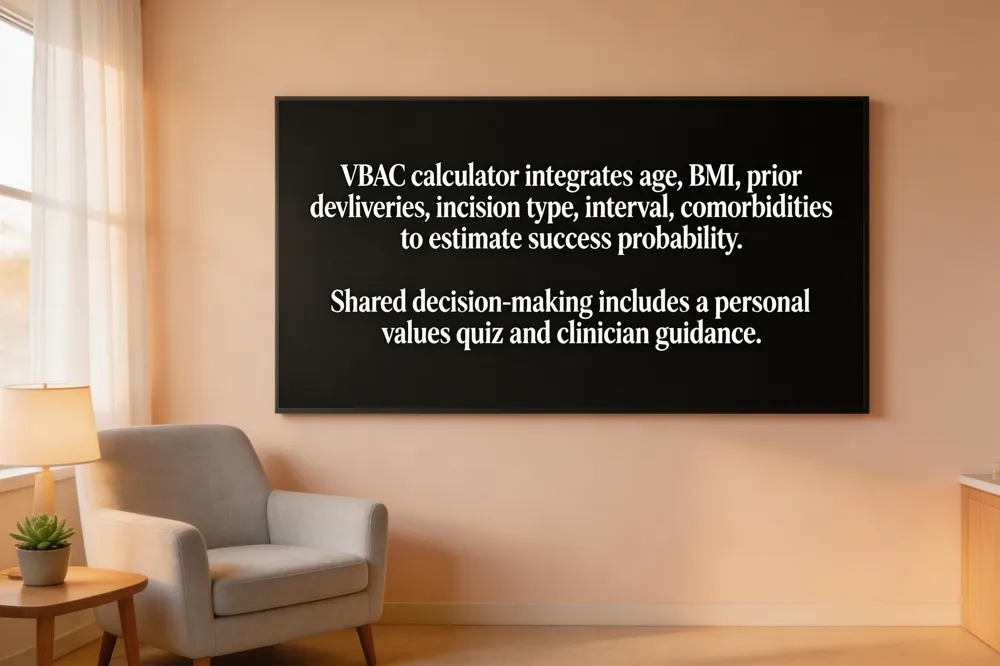
Understanding whether a vaginal birth after cesarean (VBAC) is the right option involves more than a simple yes‑or‑no answer. A VBAC calculator is an evidence‑based tool that integrates personal and obstetric variables—such as maternal age, pre‑pregnancy BMI, prior vaginal deliveries, number of previous C‑sections, type of uterine incision, interval since the last surgery, chronic hypertension, tobacco use, and the indication for the prior C‑section—to generate a probability of a successful VBAC. The calculator uses regression formulas derived from large cohort studies (MFMU, ACOG) and provides a numeric estimate that clinicians and patients can discuss together. While the estimate helps frame risk‑benefit conversations, it is not a guarantee; individual circumstances and provider expertise always influence the final outcome.
There is no universal “VBAC or C‑section quiz.” Most practices combine a detailed medical history, review of the incision type, and the VBAC calculator with a short questionnaire that explores personal goals, fears, and preferences. This “quiz” is really a structured self‑assessment that clarifies values and expectations, allowing the obstetrician to explain the statistical likelihood of success alongside the emotional and logistical aspects of each option. The result is a shared, woman‑centered decision about trial of labor after cesarean versus repeat surgery.

Recovery begins the moment you give birth. In the first 1‑2 weeks the uterus contracts (early uterine involution) and lochia‑ normal vaginal bleeding) peaks, while perineal soreness, swelling, and any stitches or episiotomy need gentle care—ice packs, sitz baths, and perineal rinses help keep the area clean and comfortable. Light walking and ankle pumps are encouraged to promote circulation and prevent clots.
Weeks 3‑4 mark a transition: uterine cramping eases, bleeding tapers, and you can start gentle pelvic‑floor exercises (Kegels) and low‑impact cardio such as short walks or stationary cycling. Light housework is usually tolerable, but avoid lifting more than 10‑15 lb.
By weeks 5‑6 most women feel strong enough for more structured pelvic‑floor strengthening, core‑engagement breathing, and modest lifting. The abdominal incision (if you had a C‑section) should be well on‑healed, allowing a gradual return to routine chores and possibly driving if pain‑free.
Weeks 7‑8 typically bring a return to normal daily routines, moderate exercise, and a 6‑week postpartum checkup to confirm healing. Throughout, stay hydrated, eat nutrient‑rich foods, and seek support for any signs of infection, excessive bleeding, or mood changes such as postpartum depression. Early screening and professional help can ensure a smoother physical and emotional recovery.

A balanced post‑C‑section diet is essential for tissue repair. Aim for lean protein—chicken, fish, tofu, beans, low‑fat dairy—to rebuild muscle and support wound healing. Pair protein with iron‑rich foods (spinach, egg yolks, pumpkin seeds) and vitamin C sources (citrus, berries, bell peppers) to enhance iron absorption. Add zinc‑rich snacks (almonds, seeds) and vitamin E‑rich oils, spinach, and broccoli for antioxidant protection. Stay hydrated with 1.5–2 liters of water daily and include fiber‑rich vegetables, whole grains, and fruits to prevent constipation. Limit fried, oily foods, strong spices, gas‑producing items, excessive caffeine, and sugary sodas, as they can delay healing and cause discomfort.
A well‑prepared recovery kit can make the first weeks at home smoother. Essentials include a peri‑bottle for gentle cleansing, high‑waist postpartum underwear, an abdominal support binder or belly wrap, silicone scar‑care patches, moisture‑wicking grip socks, and soft pillows for abdominal support. Add over‑the‑counter pain relievers (as directed), “skip‑the‑shower” wipes, and a sturdy toiletry bag to keep everything organized.
Avoid activities that strain healing tissues: do not lift more than 10 lb, refrain from vigorous exercise, and postpone sexual intercourse for at least six weeks unless cleared by your provider. Do not insert anything into the vagina (tampons, douches, menstrual cups) until lochia has stopped and the cervix is closed. Smoking, exposure to second‑hand smoke, and ignoring signs of infection, excessive bleeding, fever, or severe pain should also be avoided. If any concerning symptoms arise, contact your OB‑GYN promptly.

A successful VBAC benefits from gentle, uterus‑friendly exercises that build overall pelvic and core tone without overstretching the previous uterine scar. Daily Kegel contractions, modified planks, side‑lying leg lifts, and brisk walking are safe starting points. Prenatal‑ or low‑impact Pilates can improve flexibility, posture, and the abdominal muscles that support the uterus. A balanced diet rich in lean protein, whole grains, leafy greens, vitamin C fruits, and healthy fats supplies the nutrients needed for tissue repair. Allow an 18‑to‑24‑month interval after a prior C‑section before attempting a VBAC, and keep stress low with breathing techniques and adequate rest.
C‑section scar healing follows four stages: 0‑2 weeks of redness, swelling, and soreness as inflammation closes the wound; 2‑6 weeks when a thin scab forms, redness fades, and tissue gains strength; 6‑12 weeks of remodeling, making the scar softer and flatter; and 3‑6 months for final maturity, though improvement may continue up to a year. Watch for infection, worsening pain, or abnormal widening and contact your provider promptly.
Overall postpartum recovery extends beyond the first 6‑8 weeks of physical healing. While the uterus and perineum typically heal within that window, hormonal balance, mood, and full pelvic‑floor and core strength may take 9‑12 months, with some women feeling fully back to pre‑pregnancy health by 12‑18 months. Regular follow‑up with a women’s health specialist ensures a safe, personalized return to normal activities.

After a delivery—whether a VBAC or a repeat C‑section—ongoing post‑delivery care is essential. Stay in touch with your health‑care team during the first 24 hours and schedule a postpartum visit by six weeks. Monitor lochia and any incision or perineal site for increasing pain, foul discharge, or heavy bleeding, keep the area clean and dry, and support healing with rest, hydration, a protein‑rich diet, and gentle pelvic‑floor (Kegel) exercises. If you experience fever, severe pain, persistent bleeding, or mood changes, contact your provider promptly.
Sexual activity after a C‑section is generally safe once the incision and uterus have healed—typically around six weeks postpartum, or earlier if your OB‑GYN advises. Use a silicone‑based lubricant and choose comfortable positions during the early weeks; stop and seek care if pain, bleeding, swelling, or infection signs arise. Open communication with your partner about any tenderness or emotional readiness is also important.
Postpartum depression affects up to one in seven new mothers and can persist beyond the brief “baby blues.” Watch for persistent sadness, loss of interest, sleep disturbances, anxiety, irritability, or difficulty bonding with your baby. Screening tools such as the Edinburgh Postnatal Depression Scale help identify it early. Treatment often combines psychotherapy, support groups, and, when appropriate, safe antidepressant medication. If symptoms last more than two weeks, reach out to your OB‑GYN or a mental‑health professional without delay.
VBAC offers a faster, less painful postpartum course. Women typically leave the hospital after 1‑2 days, resume light housework within a week, and can drive or return to work by the third or fourth week. Compared with a repeat C‑section, VBAC avoids abdominal surgery, reduces blood loss, lowers infection risk, and eliminates scar‑related discomfort, allowing earlier breastfeeding and pelvic‑floor recovery. C‑section recovery, on the other hand, requires a 3‑4‑day stay, incision care, pain‑medication for several weeks and activity restrictions for up to 6‑8 weeks. Because each woman’s health history, uterine incision type, and personal circumstances differ, individualized counseling—such as provided by board‑certified OB‑GYNs—ensures the safest, most satisfying birth plan.

.png)
%201.png)
Compassionate care for every stage of womanhood. Visit one of our convenient locations or book your appointment online today.