Protecting Ovarian Health: Signs, Symptoms, and Proactive Care
What Every Woman Should Know About Ovarian Health
Protecting Ovarian Health: Signs, Symptoms, and Proactive Care
Follow us here:


Hysteroscopic myomectomy is a minimally invasive surgical technique that removes submucosal uterine fibroids through the vagina and cervix, using a thin hysteroscope and electrosurgical or morcellation tools. Because the procedure eliminates abdominal incisions, patients experience less pain, lower blood loss, and a rapid return to daily activities—often within 48 hours. This approach aligns with modern women’s‑health priorities, preserving the uterus, reducing recovery time, and minimizing hospital costs, which can be up to 40 % lower than open hysterectomy or abdominal myomectomy. In Queens, NY, many practices are woman‑led, offering personalized counseling, culturally sensitive communication, and expertise in the latest hysteroscopic technologies. Such care models empower patients to make informed decisions about symptom relief, fertility preservation, and overall wellness and long‑term health outcomes.

Hysteroscopic myomectomy is performed through the vagina and cervix without any abdominal incisions. A thin, high‑definition hysteroscope is introduced into the uterine cavity, where a bipolar resectoscope or a mechanical morcellator (e.g., MyoSure®) shaves the submucosal fibroid into small fragments that are removed through the instrument’s suction channel. The procedure is ideal for submucosal fibroids (FIGO types 0‑2) that are ≤4 cm, especially when they cause abnormal uterine bleeding or infertility.
Advanced equipment and instruments – Modern systems use 24‑28 F hysteroscopes with 12‑degree telescopes, bipolar electrosurgical loops, and fluid‑management modules that maintain uterine distension with saline, reducing the risk of hyponatremia. Mechanical morcellators enhance precision and shorten operative time, which in reported series averages 30‑90 minutes.
Anesthesia options and safety – Most centers use short‑acting general anesthesia for complete immobility, while deep‑sedation (propofol + opioid) is an alternative for smaller, straightforward cases. Both approaches are safe; the anesthesiologist tailors the plan to the patient’s health and the myoma’s complexity.
Driving after surgery – Patients may drive once the anesthesia has worn off and they feel alert, pain‑free, and without dizziness. If general anesthesia was used, waiting until the next morning or having a responsible adult accompany them for 24‑48 hours is advised.
Submucosal fibroid indications – Hysteroscopic myomectomy is the first‑line, minimally invasive treatment for submucosal fibroids that cause menorrhagia, pelvic pressure, or fertility problems. Success in controlling bleeding exceeds 80 % and pregnancy rates improve to 30‑70 % in appropriately selected women.

Hysteroscopic myomectomy is performed through the vagina without abdominal incisions, so most patients go home after a few hours of observation. Light cramping, mild vaginal spotting and occasional shoulder discomfort are common for the first 24‑48 hours; pain can be managed with acetaminophen or ibuprofen and short walks are encouraged.
Week 1: Rest at home, limit activity to short walks, and avoid lifting more than 5‑10 lb. Spotting may continue; if heavy bleeding, fever or worsening pain develop, contact your provider.
Weeks 2‑3: Gradually increase daily activities. Light household tasks and short strolls are fine, but continue to avoid heavy lifting and vigorous exercise. You may resume light desk work within 1‑2 days if you feel up to it.
Week 4: Most women can return to normal (non‑impact) exercise, resume sexual activity if comfortable, and continue to avoid heavy lifting or intense workouts until cleared by the surgeon.
Weeks 5‑6: Full return to regular work, moderate exercise and routine childcare is usually possible. Continue to monitor for unusual bleeding or pain.
Uterine healing: The endometrial lining regenerates over 4‑6 weeks; the uterine wall itself heals more quickly because the procedure does not cut the myometrium. Heavy lifting and strenuous activity should be avoided for the full recommended period.
Three‑month follow‑up: A pelvic exam or ultrasound confirms complete cavity healing, checks for adhesions, and assesses menstrual pattern normalization. Most women are back to their usual routines; any new pain, heavy bleeding, or fever warrants prompt evaluation.
Overall, patients often feel ready for light activities within 1‑2 days and can return to work within a week, with full uterine healing by 4‑6 weeks and a comprehensive check‑up at three months.

Hysteroscopic myomectomy is generally well tolerated, but most women notice a few short‑term side effects. Light vaginal spotting or bleeding may continue for up to two weeks, accompanied by mild cramping and abdominal discomfort. A low‑grade fever or infection is uncommon, and serious complications such as uterine perforation fluid overload, or excessive bleeding occur in less than 1 % of cases.
In the weeks after surgery the uterus returns to its normal function, often relieving heavy menstrual bleeding and pelvic pressure. You may experience temporary abdominal bloating, mild swelling, and tenderness as the uterine cavity heals. Menstrual cycles usually become more regular, though some women notice brief spotting or a temporary change in flow. Emotional well‑being can fluctuate, but these symptoms typically improve as activity is gradually resumed.
To promote a smooth recovery, avoid lifting more than 10 lb, vigorous exercise, jogging, or heavy‑weight training for the first 4–6 weeks. Refrain from sexual intercourse, using tampons, douches, or hot tubs until cleared by your provider, and limit prolonged standing. Follow your surgeon’s guidance on pain medication, hydration, and stool softeners, and report any sudden heavy bleeding, fever, or severe pain promptly.
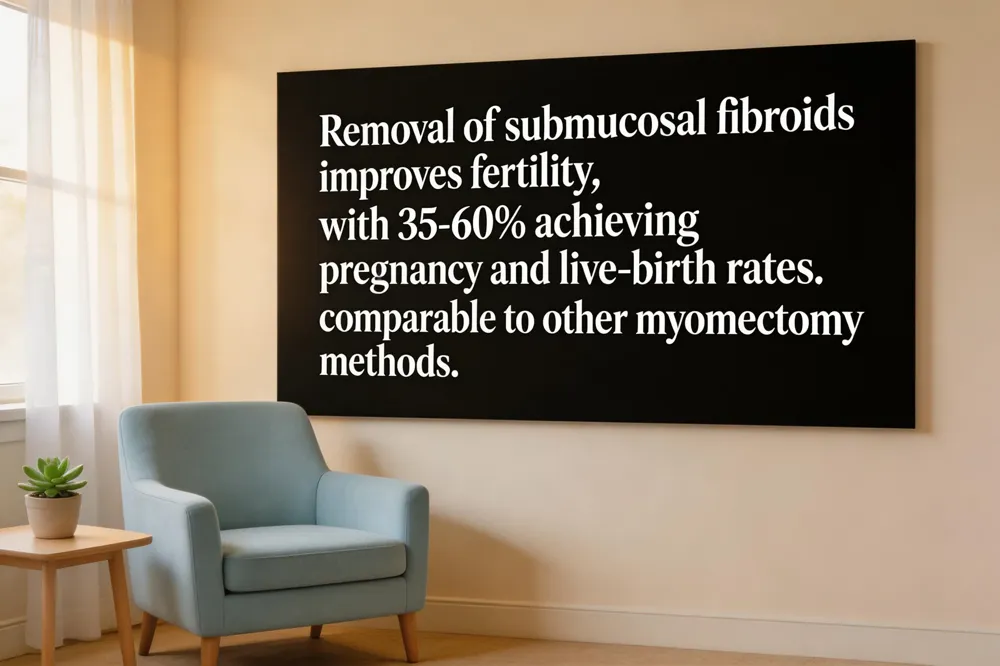
Hysteroscopic myomectomy, which removes submucosal fibroids through the cervix, often improves fertility. In a series of 120 women, 35 % of those seeking pregnancy achieved a successful pregnancy after the procedure, and other U.S. studies report 60‑90 % symptom‑relief and comparable pregnancy rates to laparoscopic or abdominal myomectomy.
Pregnancy after hysteroscopic myomectomy – Fertility generally rises after removal of cavity‑distorting fibroids, with live‑birth rates similar to other myomectomy routes. Timing is individualized based on surgical extent, age, and healing assessment.
Hysteroscopic myomectomy vs laparoscopic myomectomy – Hysteroscopic removal is outpatient, scar‑free, and ideal for fibroids ≤4‑5 cm, allowing return to normal activities in 1‑2 days. Laparoscopic myomectomy handles larger or deeper fibroids through small abdominal ports, requires a brief hospital stay and 2‑4 weeks of recovery, and carries slightly higher bleeding and adhesion risks. Both preserve the uterus and fertility.
Laparoscopic myomectomy – This minimally invasive approach enucleates fibroids via a camera and instruments, sutures the uterine wall, and extracts tissue with morcellation or retrieval bags. It is suited for limited intramural or subserosal fibroids, offering less pain and scarring than open surgery while maintaining reproductive potential.

In the United States, out‑of‑pocket expenses for hysteroscopic myomectomy typically range from $3,000‑$7,000, depending on facility type, surgeon fees, and geographic location (e.g., New York City). Most insurance plans cover the procedure when medically necessary, reducing patient cost to a copay or small percentage of the total; uninsured or high‑deductible patients may bear the full amount, so obtain a detailed estimate and verify benefits before scheduling.
Compared with laparoscopic myomectomy, the hysteroscopic approach is outpatient‑based, uses a vaginal route, and targets submucosal fibroids ≤4‑5 cm, offering a scar‑free recovery in 1‑2 days. Laparoscopic myomectomy requires small abdominal incisions, a brief hospital stay, and a 2‑4‑week recuperation, making it suitable for larger or deeper fibroids. Both preserve fertility, but hysteroscopic surgery is generally less costly—about 40 % lower—while minimizing pain, blood loss, and postoperative complications.

Choosing the right provider in Queens ensures personalized, compassionate care for every stage of women’s health.
Queens, NY is home to several board‑certified female OB‑GYNs who specialize in comprehensive women’s health, from routine exams to minimally invasive surgery. Practices such as Garden OBGYN, NewYork‑Presbyterian Queens, and Mount Sinai Doctors offer female providers with convenient locations. Use the New York State Board of Medicine registry or health‑system directories to confirm gender and specialty, and schedule a consultation to discuss your health goals.
Top female gynecologists are board‑certified, have strong patient‑review scores, and provide advanced services like hysteroscopic myomectomy. Women‑for‑Women OB/GYN in Lake Success and Garden OBGYN in Forest Hills both employ female physicians and nurse practitioners, offering high‑risk pregnancy care, fertility work‑ups, and same‑day urgent appointments. Verify insurance acceptance, office hours, and communication style to ensure a comfortable fit.
The best OBGYN combines clinical expertise with a patient‑centered approach. Look for providers affiliated with reputable hospitals (e.g., NewYork‑Presbyterian Queens) and practices that offer flexible scheduling, evening/weekend slots, and advanced imaging. Strong reviews, board certification, and a reputation for empathetic care are key indicators of quality.
In Queens, women can receive full‑service, woman‑led OB‑GYN care—including annual exams, birth‑control counseling, high‑risk pregnancy management, and hysteroscopic myomectomy—at convenient locations like Forest Hills. Online booking, same‑day urgent care, and on‑site advanced imaging ensure timely, comprehensive treatment.

What are the pros and cons of hysteroscopic myomectomy?
Hysteroscopic myomectomy is performed outpatient the cervix, so there are no abdominal incisions, virtually no scar, and most women go home the same day. Recovery is rapid (1‑2 days) and postoperative pain is mild. It preserves the uterus and fertility and is ideal for submucosal fibroids ≤4‑5 cm. Limitations include inability to treat large, deep or numerous fibroids; rare complications are uterine perforation, infection, fluid‑overload, and a modest recurrence rate.
Which is more painful, open myomectomy or C‑section?
[Open myomectomy] involves a large abdominal incision and extensive uterine dissection, producing higher pain scores (often 7‑9/10) and requiring stronger analgesics. A C‑section, though also an abdominal surgery, typically results in moderate pain (4‑6/10) and a quicker return to light activity (≈1 week). Open myomectomy also has longer hospitalization and higher blood‑loss risk.
Hysteroscopic vs laparoscopic myomectomy
Hysteroscopic myomectomy removes submucosal fibroids through the vagina, offers same‑day discharge, no external scar, and 1‑2 day recovery. Laparoscopic myomectomy uses several small abdominal ports, allowing removal of larger or intramural fibroids, but requires a brief hospital stay and 2‑4 weeks of convalescence. Both preserve fertility; hysteroscopic is less invasive, while laparoscopic handles more complex cases.
Laparoscopic myomectomy
Laparoscopic myomectomy uses a camera and instruments through 3‑5 small incisions to enucleate fibroids, close the uterine wall, and morcellate tissue for extraction. It yields less pain and scarring than open surgery, a short (0‑1 night) stay, and a return to normal activities within 2‑3 weeks, but demands advanced surgical skill.
Patients who undergo hysteroscopic myomectomy can expect rapid symptom relief, minimal pain, and preservation of the uterus for fertility. The procedure is outpatient, usually completed in under 90 minutes, and most women return to normal activities within two to three days. Success rates for controlling abnormal uterine bleeding exceed 80 % and pregnancy outcomes improve when submucosal fibroids are removed. Because every woman’s anatomy, symptom profile, and reproductive goals differ, a personalized, woman‑led approach is essential. In Queens, many clinics offer board‑certified OB‑GYNs who use high‑definition hysteroscopes, bipolar energy, and office‑based settings. We encourage you to schedule a consultation, discuss your concerns, and explore the safest, most effective option for your health.

.png)
%201.png)
Compassionate care for every stage of womanhood. Visit one of our convenient locations or book your appointment online today.