
Protecting Ovarian Health: Signs, Symptoms, and Proactive Care
What Every Woman Should Know About Ovarian Health
Protecting Ovarian Health: Signs, Symptoms, and Proactive Care
Follow us here:


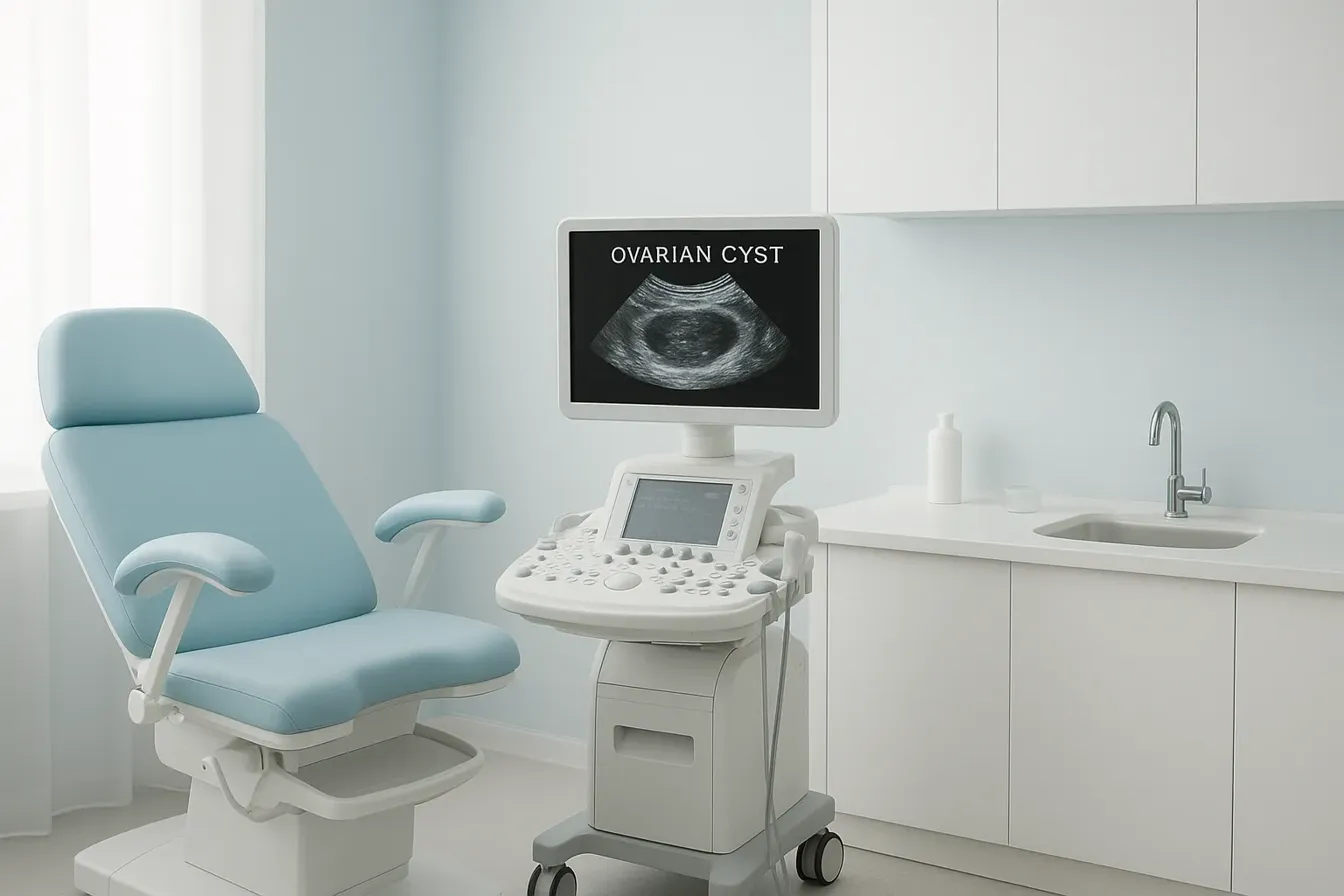
Ovarian cysts are sac-like structures filled with fluid or semi-solid material, forming on or within the ovaries. They are common in women of all ages, especially before menopause. The most frequent types are functional cysts, which develop during the menstrual cycle and usually resolve without treatment. These include follicular cysts, formed when the ovarian follicle fails to release an egg, and corpus luteum cysts, which appear after ovulation if the corpus luteum fills with fluid. Other types include cystadenomas, dermoid cysts, endometriomas, and rarely, malignant cysts.
Functional cysts arise as a natural part of ovulation. Certain medical conditions like endometriosis and polycystic ovary syndrome (PCOS) also contribute to cyst development. Fertility treatments and hormonal imbalances can increase the risk of cyst formation. While many cysts are harmless, complex cysts or those occurring after menopause may signal other health concerns.
Many ovarian cysts cause no symptoms and are resolved on their own. However, larger cysts can lead to pelvic pain, bloating, painful intercourse, and urinary or bowel changes. Sudden, severe pelvic or abdominal pain may indicate ovarian torsion or cyst rupture—both medical emergencies. Fever, nausea, vomiting, dizziness, or unexplained weight gain in conjunction with abdominal discomfort warrant prompt medical evaluation.
Ovarian cysts often remain silent, making self-detection difficult. Regular pelvic exams and awareness of subtle symptoms are vital in early recognition. Women are encouraged to track menstrual changes and report persistent or unusual pelvic symptoms to healthcare providers. Early assessment through pelvic ultrasound and appropriate diagnostic testing ensures timely management and reduces complications.

Ovarian cysts are primarily detected using a pelvic exam for ovarian cysts, where a healthcare provider may feel abnormalities during a bimanual examination. However, the definitive diagnosis is made through ultrasound for ovarian cysts. This imaging provides detailed visualization of the cyst’s size, location, and characteristics, such as whether it is fluid-filled or solid.
To further evaluate cancer risk, especially in postmenopausal women or when cysts appear complex or solid, a blood test measuring the CA 125 tumor marker test is often ordered. Elevated levels can raise suspicion for malignancy but are not definitive alone.
In some cases, laparoscopy—a minimally invasive surgical procedure involving small abdominal incisions and a camera—is performed. It allows direct visualization of the ovaries and cysts and can facilitate treatment by removing suspicious cysts during the same procedure. This approach minimizes recovery time and surgical risks compared to open surgery.
The "1-2-3 rule" is a practical guideline used during Diagnosis and Management of Ovarian Cysts based on size:
This rule assists clinicians in distinguishing normal ovarian physiology from cystic abnormalities, aiding in appropriate management decisions.
Integrating these diagnostic tools ensures accurate assessment of ovarian cysts, enabling personalized care and timely intervention when needed.

Ovarian cyst monitoring is tailored based on cyst size, type, and whether a woman is premenopausal or postmenopausal. Many functional cysts under 5 cm in premenopausal women resolve within 2 to 3 menstrual cycles, often requiring little or no follow-up beyond an initial ultrasound. For cysts ranging from 5 to 7 cm, annual ultrasounds may be sufficient to observe stability or resolution.
Larger cysts exceeding 7 cm or cysts with suspicious ultrasound features—such as solid components, septations, or irregular borders—warrant more frequent imaging and sometimes surgical evaluation.
Postmenopausal women require more vigilant monitoring because of their higher risk for malignancy. Their surveillance usually involves regular ultrasounds every 3 to 6 months, combined with serum CA-125 tumor marker blood tests, over approximately one year.
In all cases, changes in symptoms—like pelvic pain or bloating—or alterations in cyst characteristics observed in follow-up ultrasounds are important factors in deciding whether continued monitoring or intervention is necessary.
Thus, individualized care plans balance timely detection of complications with avoidance of unnecessary procedures, ensuring patient-centered management of ovarian cysts.

Most ovarian cysts are benign and often resolve spontaneously without causing harm. Functional ovarian cysts, common in reproductive-aged women, usually disappear within a few menstrual cycles. However, certain situations can elevate the risk profile of ovarian cysts, making evaluation and management essential.
Benign cysts typically are fluid-filled ovarian cysts and simple in appearance on ultrasound, carrying a very low risk of cancer. Malignant potential is a concern especially when cysts are complex, larger than 10 cm, or accompanied by solid components, septations, or papillary formations. The presence of solid ovarian cysts risk after menopause significantly raises suspicion for malignancy.
Complications can arise with larger or persistent cysts. Ovarian torsion occurs if a cyst leads to twisting of the ovary, abruptly cutting off its blood supply. This causes severe acute pelvic pain and constitutes a gynecological emergency. Ovarian cyst rupture can also cause sudden, sharp pain and internal bleeding, necessitating prompt medical treatment to prevent shock.
Age is a major factor in malignancy risk. Management of ovarian cysts in postmenopausal women bear a higher risk of cancer compared to those in younger women. Other risk factors include suspicious ultrasound features and elevated tumor markers such as CA-125 tumor marker test. These cases require more aggressive evaluation, sometimes involving surgical intervention and oncologic consultation.
Regular pelvic exams for cyst monitoring and timely imaging studies like ultrasound imaging for ovarian cysts are crucial for early detection, especially for asymptomatic cysts. Monitoring cyst characteristics over time allows healthcare providers to identify cysts that grow, persist, or display worrisome features, prompting early management to avoid complications or malignancy progression. Patient education about symptom awareness and scheduled gynecologic visits enhance safety and outcomes.

Many ovarian cysts, especially small and asymptomatic ones, can be managed effectively without surgery. The primary approach is watchful waiting for ovarian cysts, which involves regular follow-up pelvic ultrasounds for ovarian cysts to monitor the cyst's size and characteristics. This method is particularly appropriate for simple, fluid-filled ovarian cysts that do not cause symptoms and are seen commonly in premenopausal women.
Watchful waiting for ovarian cysts is favored when cysts are small, unilocular, and lack suspicious features. During this period, cysts often resolve spontaneously within a few menstrual cycles. Healthcare providers schedule ultrasound monitoring of ovarian cysts to observe any growth or change. If the cyst remains stable or decreases in size, invasive treatment may be unnecessary.
Hormonal contraceptives and ovarian cyst prevention, such as combined oral contraceptive pills, can help prevent the formation of new ovarian cysts by inhibiting ovulation. However, they do not shrink existing cysts. Thus, while useful as a preventive strategy in women prone to recurrent cysts, hormonal contraceptives are not a remedy for resolving current cysts.
For cysts causing mild pain, conservative treatment with nonprescription analgesics like ibuprofen can provide relief. More robust pain medications may be prescribed if discomfort is significant but without urgent need for surgery. Patient education on symptom monitoring is also crucial during this phase.
Surgery for ovarian cysts is considered when ovarian cysts are large (often over 5-10 cm), persistent, symptomatic, rapidly growing, or show features suspicious for malignancy. Additional indications include acute complications such as ovarian torsion, rupture causing severe pain and internal bleeding, or elevated tumor markers in postmenopausal women. In such cases, surgical removal may involve cystectomy procedure or oophorectomy procedure, with minimally invasive laparoscopy for ovarian cyst removal preferred when feasible.
By adopting a patient-centered approach, physicians often balance watchful waiting for ovarian cysts and medical management, reserving surgery for cysts that pose significant health risks or fail to resolve conservatively.

Surgery for ovarian cysts primarily involves two approaches: laparoscopy for ovarian cysts and laparotomy. Laparoscopy is a minimally invasive technique where surgeons make small incisions in the abdomen to insert a laparoscope and specialized instruments to remove the cyst. This approach typically results in less postoperative pain, quicker recovery, and shorter hospital stays, with many patients discharged the same or next day.
Laparotomy is a more invasive open surgery with a larger abdominal incision, reserved for cases involving very large cysts, suspicion of cancer, or complicated cysts that cannot be safely removed laparoscopically. This method usually requires a longer hospital stay and extended recovery period.
Surgical procedures include cystectomy procedure, where only the cyst is removed, preserving the ovary, or oophorectomy procedure, where one or both ovaries are removed. Oophorectomy is typically considered if the cyst is malignant, very large, or causing significant damage to ovarian tissue.
Laparoscopy is preferable for benign cysts due to its minimally invasive nature. It reduces surgical trauma and promotes faster healing. Laparotomy is reserved for complex or suspicious cysts, ensuring safe, complete removal particularly when cancer is a concern.
Cystectomy procedure is the surgery of choice when the cyst is benign and conserving ovarian tissue is possible, especially important for reproductive-aged women concerned about fertility. Oophorectomy procedure is indicated for cysts that are malignant, extensively damaging, or when malignancy risk cannot be ruled out.
Modern laparoscopy for ovarian cyst removal techniques utilize high-definition cameras and refined instruments allowing precise removal of cysts while sparing ovarian tissue. Efforts focus on preserving fertility by minimizing ovary removal and trauma. Enhanced imaging and surgical skill have improved outcomes and decreased complication rates.
Recovery after laparoscopy is usually rapid, with most patients resuming normal activities within 1-2 weeks. Laparotomy recovery may extend to 6-12 weeks due to the larger incision and more extensive surgery. Common postoperative issues include pain, bleeding, or infection. Serious complications are rare but require prompt medical attention. Patients are counseled on symptom monitoring and follow-up care to ensure recovery and detect any recurrence or problems early.
Ovarian cyst cancer symptoms can be subtle or non-specific in early stages, making early recognition challenging. Common symptoms include persistent pelvic or abdominal pain, abdominal bloating, and a feeling of fullness even after eating small amounts.
Other signs suggesting malignancy may involve changes in bowel or bladder habits, such as increased urgency or constipation, unexplained weight loss, fatigue, and discomfort or pain during sexual intercourse. Because these symptoms are often vague and overlap with other conditions, it is important to monitor their persistence or progression over several weeks.
Healthcare providers use pelvic ultrasound for ovarian cysts imaging to assess cyst size, morphology, and presence of solid components. Blood tests including the CA 125 tumor marker test help evaluate cancer risk, particularly in postmenopausal women. When uncertainty remains, laparoscopy for ovarian cyst diagnosis or biopsy may be performed for definitive diagnosis.
Sudden severe pelvic or abdominal pain, especially if accompanied by fever, nausea, vomiting, or signs of shock (such as dizziness or rapid breathing), requires immediate medical care as these may indicate ovarian torsion and cyst rupture which are emergencies.
Recognizing subtle and persistent symptoms early and seeking prompt medical evaluation can improve diagnosis and management of ovarian cysts outcomes for ovarian cyst cancer.
Management of ovarian cysts requires tailored approaches based on factors such as age, cyst type, size, menopausal status, and symptom severity. Small, simple cysts often resolve without intervention and may only need routine monitoring with follow-up ultrasounds. Conversely, large, persistent, or suspicious cysts may necessitate surgical treatment, including cystectomy or oophorectomy. Postmenopausal cysts demand special attention due to higher malignancy risk, often leading to more intensive evaluation and intervention.
Patients should be informed about the importance of monitoring symptoms like pelvic pain, bloating, or sudden severe abdominal pain that might indicate cyst complications such as rupture or torsion. Preparing for healthcare appointments by documenting symptoms, medical history, medication use, and questions enhances effective communication and care planning. Understanding treatment options and follow-up protocols empowers patients to actively participate in their health management.
Access to expert, woman-led women’s health providers in Queens supports personalized diagnostics, advanced imaging, and minimally invasive surgical options tailored to individual needs. These specialists are well-equipped to deliver comprehensive gynecologic care, from watchful waiting to complex surgical management, ensuring safety and preserving fertility when possible.
Regular pelvic examinations are critical for early detection and ongoing assessment of ovarian cysts, especially for postmenopausal women. Maintaining open dialogue with healthcare providers fosters trust and timely intervention, reducing risks of complications and improving overall outcomes in ovarian cyst care.

.png)
%201.png)
Compassionate care for every stage of womanhood. Visit one of our convenient locations or book your appointment online today.