VBAC Myths Busted: A Guide to Safe, Informed Birth Choices
Debunking Common Myths About VBAC Procedures
VBAC Myths Busted: A Guide to Safe, Informed Birth Choices
Follow us here:



Chronic illnesses such as diabetes, hypertension, asthma, and autoimmune disorders raise the chances of pre‑eclampsia, preterm birth, low birth weight, and maternal complications. Early pre‑conception counseling lets women stabilize disease, adjust medications, and start folic‑acid supplementation before pregnancy, dramatically lowering these risks. A coordinated, multidisciplinary team—ob‑GYNs, maternal‑fetal specialists, primary‑care doctors, and disease‑specific experts—creates a personalized plan, monitors blood glucose or pressure at home, schedules extra ultrasounds, and provides emotional support, ensuring both mother and baby stay healthy throughout the journey.

Effective high‑risk pregnancy care hinges on a coordinated team that blends obstetric expertise with disease‑specific knowledge. An OB‑GYN or the primary pregnancy manager, conducting routine exams, monitoring fetal growth, and, when needed, evaluating lymph nodes as part of a comprehensive well‑woman assessment. Maternal‑fetal medicine specialists add advanced surveillance for conditions such as pre‑eclampsia or diabetes or autoimmune disease, while subspecialists—cardiologists, endocrinologists, pulmonologists, rheumatologists adjust medication dosages and address organ‑specific concerns. Primary‑care providers keep chronic‑disease control stable between obstetric visits, and mental‑health professionals, including counselors and multilingual doula programs offer emotional support and stress‑reduction techniques that improve outcomes. Together, the team creates an individualized pregnancy plan that outlines home glucose or blood‑pressure monitoring, scheduled extra ultrasounds, nutrition counseling, and postpartum follow‑up.
Can an OB‑GYN check lymph nodes? Yes. During a routine well‑woman exam the OB‑GYN palpates neck, axillary, and groin areas to detect enlarged or tender nodes, which may signal infection, inflammation, or, rarely, malignancy. Abnormal findings prompt further testing or specialist referral.
What is the difference between an OB/GYN and a women’s clinic? An OB‑GYN is a physician trained in obstetrics and gynecology. A women’s clinic is a care setting that bundles services—primary care, family planning, menopause management, and obstetric/gynecologic care—delivered by OB‑GYNs, nurse practitioners, midwives, and counselors. In short, the OB‑GYN is the specialist; the clinic is the location offering a broad menu of women’s‑health services.

Effective medication management begins with a thorough review of all prescription, over‑the‑counter, supplement and herbal products. Many chronic‑disease drugs are safe, but several require dose adjustments or substitution to avoid teratogenic risk—women with diabetes may require increased insulin dosing, exposure to antihypertensives are switched to pregnancy‑compatible agents, and certain immunosuppressants are replaced with safer alternatives.
Home monitoring of blood glucose and blood pressure is recommended for diabetic and hypertensive pregnancies to detect issues early. Women with diabetes or hypertension are instructed to check blood glucose or blood pressure at least daily, record results, and share trends with their multidisciplinary team via telehealth or secure messaging. Early detection of abnormal values prompts timely medication tweaks and prevents complications such as pre‑eclampsia or fetal growth restriction.
Additional ultrasounds are scheduled to monitor fetal growth when maternal chronic conditions could affect development—serial growth scans, Doppler studies, and frequent blood work (e.g., HbA1c, renal function, thyroid panels)—to ensure the baby is developing appropriately.
What is the best thing to support a healthy pregnancy?
The cornerstone of a healthy pregnancy is a nutrient‑dense, balanced diet that provides the extra calories (about 300 kcal / day) needed for fetal growth while supplying ample protein, whole‑grain carbs, fruits, vegetables, dairy, and lean proteins. Adequate prenatal supplementation—especially 400 µg of folic acid daily—helps prevent neural‑tube defects and ensures essential vitamins and minerals are met. Staying well‑hydrated with water and limiting caffeine, alcohol, and unsafe foods (such as unpasteurized dairy, raw seafood, and undercooked meats) further protects mother and baby. Regular, moderate exercise and appropriate weight‑gain targets support circulation, energy levels, and a smoother delivery. Together, these lifestyle habits—nutrition, supplementation, hydration, safe food handling, and activity—form the best support for a healthy pregnancy.
Maternal diseases that affect prenatal development
Maternal conditions such as chronic hypertension or gestational hypertension can reduce placental blood flow, leading to fetal growth restriction and preterm birth. Diabetes—both pre‑gestational and gestational—causes high maternal blood glucose that may result in congenital anomalies, macrosomia, and increased risk of stillbirth if not controlled. Infections, including sexually transmitted infections, toxoplasmosis, and food‑borne illnesses, can cross the placenta and cause miscarriage, birth defects, or neonatal infection. Anemia limits oxygen delivery to the fetus, potentially impairing brain development and increasing the chance of low birth weight. Maternal mental‑health disorders such as severe anxiety or depression can affect prenatal care adherence and are linked to adverse birth outcomes, including preterm delivery and low infant weight.
What are the 4 P's of obstetrics?
The adage of the “Four P's” of labor has been described for decades. The “P's” are defined as power (strength of contractions/pushing), passage (shape of maternal pelvis), passenger (size of fetus) and position (of the fetus with respect to the pelvis).

Women navigating pregnancy, chronic illness, or the transition to menopause benefit from a network of counseling, doula, and multilingual services that address both emotional well‑being and practical needs. In Queens, clinics such as the Jamaica Women’s Health Center and the women‑led practices on Queens Boulevard and Austin Street provide culturally sensitive counseling, mental‑health screening, and doula support in multiple languages, helping patients cope with anxiety, depression, or disease flare‑ups. Gynecologists are fully equipped to manage menopause; they evaluate hot flashes, night sweats, mood changes, and vaginal dryness, offering lifestyle advice, hormone therapy, or other evidence‑based treatments. For new mothers, the 3‑3‑3 breastfeeding rule—feed or pump every three hours for the first three days, emptying each breast for at least three minutes—supports a robust milk supply and reduces stress. Together, these resources create a compassionate, patient‑centered environment that empowers women throughout pregnancy, postpartum, and mid‑life.
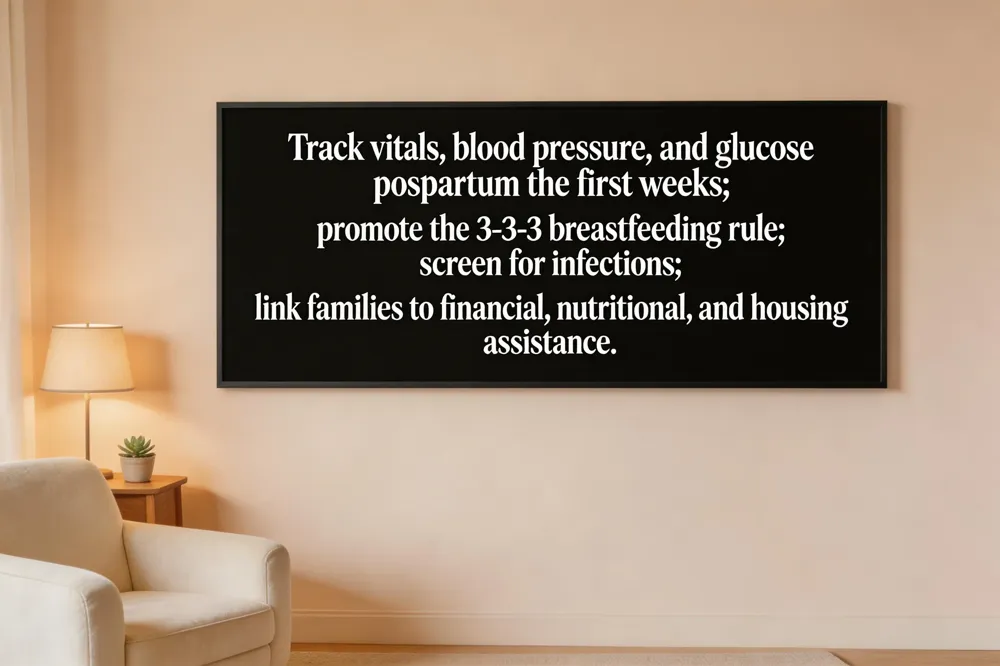
After delivery, high‑risk teams check vital signs, blood‑pressure, and glucose at each visit, often twice in the first week and then weekly until six weeks postpartum. These measurements catch early signs of pre‑eclampsia, hypertension, or uncontrolled diabetes, allowing rapid medication adjustments.
Breastfeeding support follows the 3‑3‑3 rule: begin within three hours of birth, feed at least three times a day for three days, and aim for three months of exclusive nursing when possible. Lactation consultants, multilingual doulas, and WIC resources help mothers balance milk supply with chronic‑disease management.
CDC guidelines advise prompt treatment of urinary‑tract infections: screen for asymptomatic bacteriuria early, use nitrofurantoin (after first trimester), cephalexin, or amoxicillin‑clavulanate, and follow up with repeat cultures. The CDC’s “Hear Her” campaign outlines urgent warning signs—severe headache, sudden swelling, high fever, chest pain—and stresses immediate care.
Financial assistance includes Medicaid, CHIP, WIC, SNAP, TANF, and HUD housing vouchers (Section 8, Emergency Housing Voucher). Local Queens clinics can connect mothers to these programs, housing case managers, and community‑based support groups to ensure both health and stability throughout the postpartum year.

Queens offers several women‑led obstetric practices that focus on chronic‑condition pregnancies. Women for Women OB/GYN provides a board‑certified female team, high‑risk prenatal care, minimally invasive surgery, and close coordination with LIJ Children’s Hospital NICU. Garden OBGYN in Forest Hills delivers personalized obstetrics, same‑day visits, and wellness counseling.
Hospital affiliations strengthen care: NYU Langone’s Joan H. Tisch Center for Women’s Health (Manhattan) offers a multidisciplinary team, Cardio‑Obstetrics, and on‑site imaging. The Women’s Health Center in Brooklyn—NewYork‑Presbyterian Brooklyn Methodist Hospital, Trust Women’s Healthcare, and Brooklyn Hospital Center—provides Level III NICU access, advanced sonography, and culturally competent services.
Financial, nutritional, and housing assistance is available through Medicaid, Title V, WIC, SNAP, and local HUD programs. Community‑based resources such as the National Maternal Mental Health Hotline and NYC Health + Hospitals’ multilingual doula program add emotional support.
NYU Langone Women’s Health Center delivers comprehensive, personalized obstetric and gynecologic care through a multidisciplinary team at the Joan H. Tisch Center and satellite sites, featuring Cardio‑Obstetrics and fertility programs.
Women’s health clinic Brooklyn includes NewYork‑Presbyterian Brooklyn Methodist Hospital, Trust Women’s Healthcare, and Brooklyn Hospital Center, all offering state‑of‑the‑art imaging, labs, and board‑certified OB/GYNs.
Women’s health center Manhattan is the Joan H. Tisch Center at 159 East 53rd Street, providing integrated prenatal, menopause, and specialty services with same‑day appointments and on‑site diagnostics.
Best female gynecologist Queens, NY: Women for Women OB/GYN’s all‑female staff and Garden OBGYN’s female‑focused practice are top choices for compassionate, advanced women’s health care in Queens.
Managing a pregnancy with a chronic condition works best when a coordinated, multidisciplinary team oversees care—from obstetricians and maternal‑fetal specialists to endocrinologists, cardiologists, and mental‑health professionals. Medication regimens are reviewed and adjusted for safety, while home monitoring, ultrasounds, and nutrition keep mother and baby on track. Emotional support through counseling, doulas, and peer groups eases stress. After delivery, six‑week follow‑up checks vital signs, glucose, and blood pressure, and links to Medicaid, WIC, and telehealth resources. Early, women‑led care in Queens empowers families to thrive.

.png)
%201.png)
Compassionate care for every stage of womanhood. Visit one of our convenient locations or book your appointment online today.