Separating HRT Fact from Fiction: What Every Woman Should Know
Hormone Replacement Therapy: Facts vs Myths
Separating HRT Fact from Fiction: What Every Woman Should Know
Follow us here:


Endometriosis affects about 1 in 10 people of reproductive age in the United States, making it a common yet often hidden condition. It is characterized by tissue similar to the uterine lining growing outside the uterus, which can involve the ovaries, fallopian tubes, bladder, bowel and peritoneum. The classic triad of painful periods (dysmenorrhea), chronic pelvic pain and dyspareunia is frequently reported, while many also experience heavy bleeding, bowel or urinary discomfort, and fatigue. Diagnosis is challenging because standard imaging often misses superficial lesions; definitive confirmation usually requires a diagnostic laparoscopy with biopsy. The chronic pain and uncertainty can erode quality of life, leading to anxiety, depression, and strained relationships, underscoring the need for compassionate, multidisciplinary care.

Endometriosis is a chronic, estrogen‑dependent condition in which tissue that looks and behaves like the uterine lining grows outside the uterus—on ovaries, fallopian tubes, peritoneum, bladder, bowel and other pelvic structures. This ectopic tissue responds to each menstrual cycle, bleeding, inflaming, and forming scar tissue that can lead to adhesions and deep‑infiltrating lesions.
The most common symptoms are dysmenorrhea (painful periods), chronic pelvic pain that may be constant or flare‑up, dyspareunia (painful intercourse), and non‑menstrual pain that can involve the bowel or bladder. Many women also report heavy bleeding, fatigue, and infertility.
A striking feature of endometriosis is the diagnostic delay—average 7‑10 years from first symptoms to a definitive diagnosis. Primary care providers often miss the disease because pelvic exams and ultrasound are not sensitive for superficial implants. Laparoscopy remains the gold‑standard both for visualizing lesions and for obtaining tissue for histopathology, allowing a definitive diagnosis and the opportunity for immediate excision or ablation.
Comorbidities frequently accompany endometriosis and can mimic or perpetuate pain after surgery. Adhesions develop in about 10 % of patients after complete excision, while deep infiltrating lesions may coexist with adenomyosis, pelvic floor muscle spasm, female bladder pain syndrome, or gastrointestinal disorders such as irritable bowel syndrome. Recognizing these overlapping conditions before and after surgery is essential for setting realistic expectations, planning multidisciplinary care—including pelvic floor physical therapy, hormonal suppression, and targeted pain management—and ultimately improving quality of life.
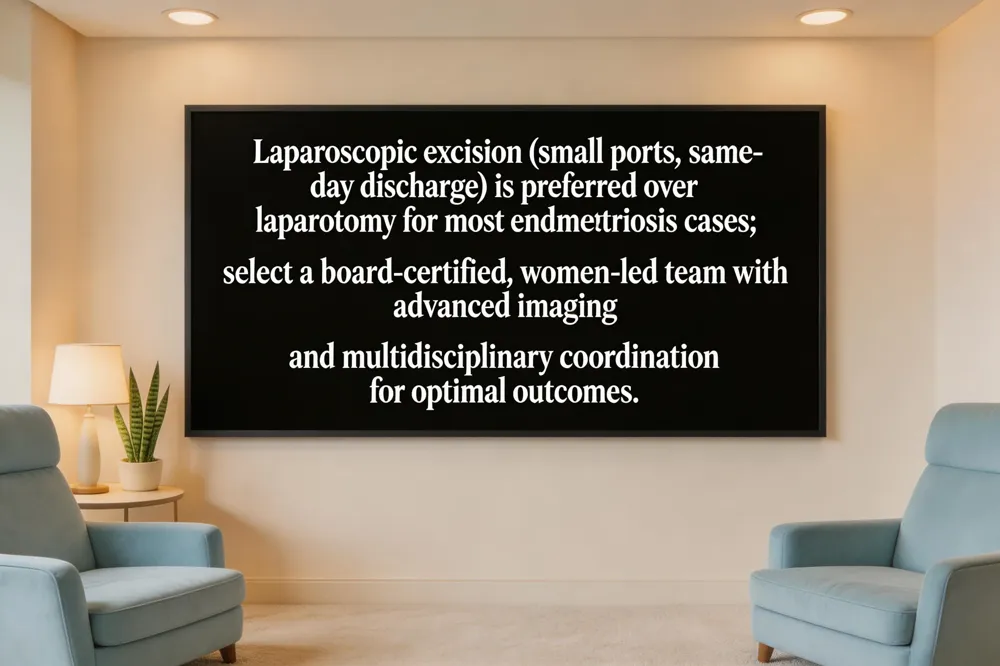
When facing endometriosis surgery, Queens patients benefit from a clear comparison of laparoscopic excision and laparotomy. Laparoscopic excision uses small 5‑mm ports, a high‑definition camera, and specialized instruments to remove lesions while preserving healthy tissue; it typically results in same‑day discharge, a two‑week return to normal activities, and a lower risk of infection and organ injury. In contrast, laparotomy involves a larger abdominal incision, longer hospital stay, and a recovery period of six weeks or more, making it suitable only for extensive disease where minimally invasive access is not feasible.
Choosing a board‑certified, women‑led practice is essential. Women‑led practices in Queens, such as NewYork‑Presbyterian Queens, prioritize shared decision‑making and culturally sensitive care. NewYork‑Presbyterian Queens provides comprehensive obstetrics and gynecology services, including routine exams, family‑planning counseling, prenatal testing, fertility services, and treatment of gynecologic conditions such as fibroids and ovarian cysts. The facility also features advanced urogynecology, robotic and minimally invasive surgery, and a Level III neonatal intensive‑care unit for high‑risk pregnancies. Patients can access personalized care through the NewYork‑Presbyterian Medical Group Queens locations throughout the borough. The Queens campus is supported by specialists from Weill Cornell Medicine and includes a dedicated breast center and an institute for placental medicine.
Pre‑operative evaluation must screen for secondary diagnoses—adhesions, pelvic floor spasm, adenomyosis, bladder pain syndrome, and gastrointestinal disorders to set realistic postoperative expectations and avoid attributing persistent pain to recurrent endometriosis. Access to advanced imaging (MRI, high‑resolution ultrasound) and multidisciplinary coordination (gynecologists, colorectal surgeons, pelvic floor physical therapists, pain specialists) further enhances surgical planning and long‑term outcomes for women seeking relief from endometriosis.

Best OBGYN in Queens NY If you’re looking for the best OB‑GYN in Queens, NY, Garden OB/GYN stands out as a women‑led practice that offers comprehensive obstetric and gynecologic care with a personalized, compassionate approach. Their two convenient locations in Forest Hills provide a full range of services—from routine exams and birth‑control counseling to high‑risk pregnancy management and minimally invasive procedures—led by board‑certified specialists. Patients consistently praise the clinic’s attentive physicians, modern ultrasound technology, and same‑day appointment availability. Another top choice is NewYork‑Presbyterian Queens, which combines a large network of board‑certified OB/GYNs with advanced urogynecologic and robotic surgery options.
Best female gynecologist Queens, NY Among the highest‑rated female gynecologists in Queens, NY are the six board‑certified OB/GYN physicians at Women for Women OB/GYN, a women‑led practice offering everything from routine exams and birth‑control counseling to minimally invasive surgery for endometriosis, fibroids, and pelvic pain. Garden OB/GYN also employs female providers at its Queens Boulevard and Austin Street locations, emphasizing compassionate, patient‑centered service and same‑day appointments for urgent concerns.
Female gynecologist Queens, NY Our women‑led practice in Queens delivers comprehensive obstetrics and gynecology care with board‑certified providers skilled in laparoscopic excision of endometriosis, pelvic‑floor physical therapy, and hormonal management. We prioritize individualized treatment plans, transparent communication, and a comfortable environment for all women’s‑health needs. Schedule an appointment today to experience expert, empathetic care tailored to your health journey.
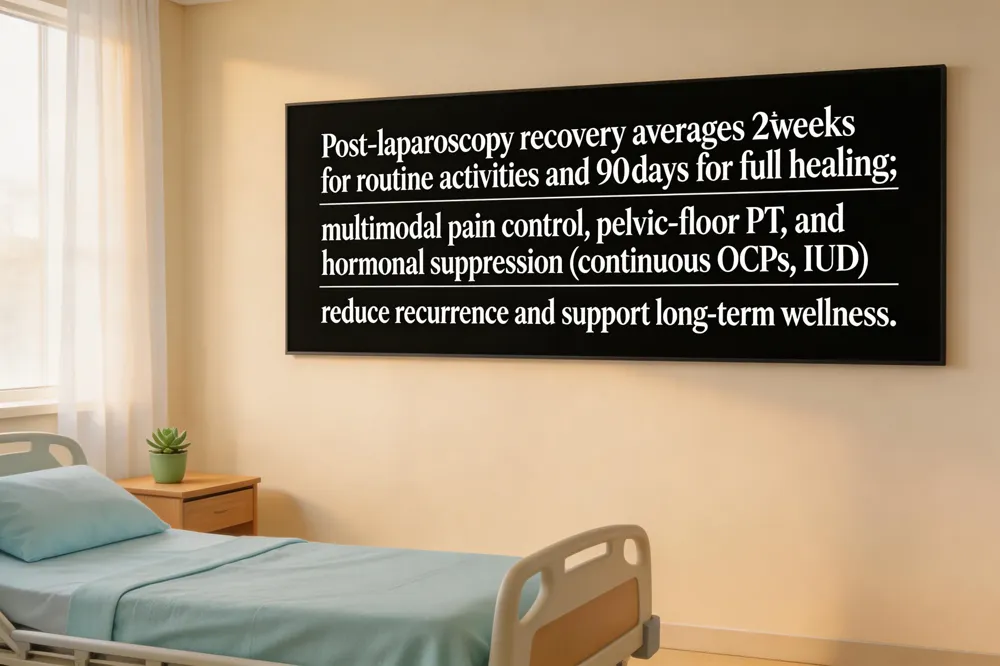
After a complete laparoscopic excision of endometriosis, most patients return to normal activities within two weeks, and full recovery period of approximately 90 days after complete excision of endometriosis is usually seen. Light walking, hydration, and a balanced diet support the healing process, while heavy lifting and vigorous exercise are avoided for at least four to six weeks depending on disease extent.
Pain management is multimodal. Scheduled NSAIDs (ibuprofen or naproxen) are first‑line, combined with acetaminophen for breakthrough pain. When pelvic floor spasm is identified, a course of pelvic floor physical therapy — often guided by a women‑led therapist — reduces muscle tension and improves comfort. Adjunctive therapies such as low‑dose antidepressants, gabapentin, or nerve‑block injections may be added for neuropathic or nociplastic pain.
Post‑operative hormonal suppression (continuous oral contraceptives, progestin‑only pills, or a levonorgestrel‑IUD) is routinely prescribed to lower estrogen drive, diminish lesion regrowth, and cut recurrence rates, which range from 10‑30 % within five years.
In New York City, medication access and costs vary. The city’s Sexual Health Clinics provide the abortion pill for free or at reduced cost for eligible patients, and Medicaid covers the full expense. Private insurers regulated by New York must also cover medication abortion without deductible or copay. For those without insurance, the New York Abortion Access Fund offers financial assistance.
Is the abortion pill free in NYC? Yes—qualified patients can obtain it at no cost through city clinics, Medicaid, or state‑regulated insurance plans.
Abortion clinic Queens NY All Women’s Medical of Queens (120‑34 Queens Blvd #420A, Kew Gardens) and Choices Women’s Medical Center (718‑786‑5000) provide medication and surgical abortions with financial assistance and compassionate, woman‑focused care.
All women’s medical of queens reviews The practice holds a 3.8‑star rating on Yelp; patients praise its friendly multilingual staff, thorough explanations, and personalized treatment plans.
All women’s medical of queens A woman‑led practice offering comprehensive OB‑GYN services, including abortion care, family planning, and extensive post‑operative support, with flexible payment options and extended hours.

Even after a complete excision of endometriotic lesions, a minority of patients continue to experience pelvic pain. Studies show that only about 10 % develop severe adhesions and less than 15 % have recurrent disease, yet persistent symptoms occur in roughly 7 % of cases because of secondary diagnoses. Common mimickers include postoperative adhesions, pelvic‑floor muscle spasm, adenomyosis, female bladder‑pain syndrome (FBPS), and gastrointestinal disorders such as irritable bowel syndrome. When pelvic‑floor spasm is identified pre‑operatively, targeted pelvic‑floor physical therapy—often coordinated by a multidisciplinary team of gynecologists, physiotherapists, pain specialists, and mental‑health providers—can dramatically improve outcomes. Patients are encouraged to keep a detailed pain diary, noting pain intensity, timing, triggers, and any urinary or bowel changes; this record helps clinicians differentiate new or secondary sources of pain from true recurrence. Persistent symptoms should prompt a follow‑up appointment with a gynecologist experienced in endometriosis, who can arrange imaging, cystoscopy, or diagnostic laparoscopy as needed. In Queens, New York, women can access such specialized, women‑led care at centers like NYC Health + Hospitals Queens, NY Women Langone Health HealthThe Pavilion Sinai Healthres Advanced which is a comprehensive, patient‑centered approach to evaluating and managing post‑surgical pain.

Choosing a women‑led practice in Queens, NY, offers several tangible benefits. Female gynecologists bring a compassionate, patient‑centered approach that emphasizes listening, shared decision‑making, and personalized care plans—especially important for chronic conditions such as Endometriosis, adenomyosis, or fibroids.
Coordinated multidisciplinary care further improve outcomes. When a practice integrates gynecologists, pelvic‑floor physical therapists, pain specialists, dietitians, and mental‑health counselors, patients receive comprehensive management that addresses both the physical and emotional aspects of pelvic pain. This collaborative model reduces the risk of missed secondary diagnoses (e.g., adhesions, bladder pain syndrome) and streamlines postoperative care, including hormonal suppression and fertility counseling.
Key considerations when selecting a Queens practice include: the presence of board‑certified female providers, accessibility of minimally invasive surgery (laparoscopy or robotic assistance), transparent counseling on recovery timelines (typically 2‑4 weeks for laparoscopy, up to 6 weeks for more extensive surgery), and a clear follow‑up protocol that monitors pain, hormone therapy, and reproductive goals.
Long‑term follow‑up is essential. Practices that schedule regular postoperative visits, offer fertility counseling, and maintain a supportive environment—often via telehealth or same‑day appointments—help women navigate recovery, prevent recurrence, and plan future family‑building.
Female gynecologist Queens, NY: If you’re looking for a female gynecologist in Queens, NY, our woman‑led practice offers comprehensive obstetrics and gynecologic care right in the heart of the borough. Our board‑certified providers specialize in everything from routine annual exams, pap smears, and birth‑control counseling to high‑risk pregnancy management, minimally invasive surgery, and treatment of conditions such as fibroids, Endometriosis, and uterine polyps. We prioritize personalized, compassionate care, taking the time to listen to your concerns and tailor a treatment plan that fits your lifestyle and health goals. Our modern, evidence‑based facilities on Queens Boulevard and Austin Street provide a comfortable, private environment for all women’s‑health needs. Schedule an appointment today and experience the expertise and empathy of a dedicated female OB‑GYN who truly understands your health journey.
Surgical removal of endometriotic tissue—most often performed laparoscopically—provides dramatic, long‑lasting relief for the majority of patients. Studies show that 70‑80 % of women experience a 60‑80 % reduction in chronic pelvic pain within six months, and many regain the ability to exercise, work, and enjoy intimacy without the constant burden of dysmenorrhea or dyspareunia. Yet surgery is only one piece of the puzzle. Optimal outcomes rely on a multidisciplinary team that includes pelvic‑floor physical therapists, pain specialists, hormonal‑therapy experts, and mental‑health counselors who address adhesions, muscle spasm, central sensitization, and the emotional toll of chronic pain. Patients are encouraged to seek women‑led practices that tailor treatment plans to individual goals—whether preserving fertility, managing symptoms, or planning for future family building—ensuring compassionate, personalized care at every step of the journey.

.png)
%201.png)
Compassionate care for every stage of womanhood. Visit one of our convenient locations or book your appointment online today.