A Confident Start to Prenatal Care
Your First Prenatal Visit: Questions Worth Asking
A Confident Start to Prenatal Care
Follow us here:



Learning you are pregnant can bring excitement, uncertainty, or several feelings at once. Whatever your response, the first prenatal appointment is a place to talk openly about what matters to you, including questions or worries you may not yet know how to express.
Prenatal care is more than a set of tests. It can include reviewing your health and pregnancy history, checking your wellbeing, discussing recommended screenings, and answering questions about what comes next. The American College of Obstetricians and Gynecologists’ overview of prenatal care also describes support with practical needs and community resources as part of care.
At raveco.com, obstetrics and gynecology care in Queens is centered on each patient’s health needs and concerns. Sharing relevant medical history, medicines, and supplements helps your provider build a clearer picture of your health and discuss care that fits your circumstances. You can also ask how to reach the care team between visits if questions arise.

After a positive pregnancy test, contact an obstetrician or another prenatal care provider to arrange an appointment. You do not need to wait for symptoms or a particular pregnancy milestone. Early contact gives the care team time to review your health history and plan care around your needs.
The first visit is often planned for around eight weeks, but timing and appointment availability vary. ACOG advises starting prenatal care in the first trimester, with a visit before 10 weeks after the last menstrual period being ideal when feasible. These weeks are counted from the first day of your last menstrual period, not from conception. If you are unsure of that date, call anyway; your provider can help determine the next step. See ACOG’s guidance on starting prenatal care.
Contact the care team promptly if you have a chronic health condition, take prescription medicines or supplements, or have had complications in a previous pregnancy. Don’t stop or change medication without medical advice. If you have pain or bleeding, call your provider for guidance rather than waiting for a routine appointment. For urgent or severe symptoms, seek immediate medical care.
At raveco.com, prenatal care is part of comprehensive obstetrics and gynecology services in Queens, with care focused on each patient’s health circumstances. When you call, share any concerns and ask when you should be seen. Preparing for your first prenatal visit can also help you know what information to have ready.

The first prenatal appointment is often longer than later checkups because it may combine a health-history review, examination, tests, counseling, and care planning. The exact agenda depends on your health and pregnancy.
Your provider may ask about menstrual and gynecologic history, previous pregnancies and their outcomes, health conditions, surgeries, and family medical history. Be ready to discuss prescription and over-the-counter medicines, vitamins, supplements, tobacco or alcohol use, and possible exposures at home or work. This information helps shape care for your circumstances, as Mayo Clinic’s first-trimester prenatal guidance explains.
Questions about substance use or intimate partner violence can feel personal, but honest answers can help your clinician offer appropriate support. If you are concerned about confidentiality, say so and ask how your information is handled. You can also ask for time to speak with the provider privately, even if you bring someone with you.
Measurements may include weight, height, and blood pressure. Depending on your needs and screening history, the examination may include a pelvic or breast exam, or a Pap test if one is due. Your care team may recommend blood or urine tests; ask what each test checks and how you will receive the results. ACOG’s overview of routine pregnancy tests describes common early testing.
Your provider will estimate a due date using the first day of your last menstrual period and may use an early ultrasound to confirm it. This date is an estimate, not a prediction of the day your baby will arrive. It helps guide pregnancy monitoring and the timing of tests.
Bring a list of medicines and supplements, relevant records if available, and questions you want answered. A partner or other support person can usually attend, listen, and help you remember details. Check the office’s visitor policy when booking, and request private conversation if you prefer.
At a Queens practice such as raveco.com, the appointment can also be a chance to discuss your health history and preferences with a women-led obstetrics and gynecology care team.
Early prenatal lab work usually involves blood and urine. The exact panel depends on your health history, risk factors, and clinical recommendations. If you want to understand how these tests fit into a broader workup, see this guide to routine laboratory tests.
A complete blood count (CBC) measures red and white blood cells and platelets. The results can point to anemia or other blood-cell concerns. Blood typing establishes your ABO group and Rh status. If you are Rh-negative, your care team may consider additional assessment or preventive care depending on the pregnancy and other test results.
Common early screening checks include HIV, syphilis, hepatitis B and C and checks for immunity to rubella. Chlamydia and gonorrhea testing may depend on age and individual risk; tuberculosis testing is generally considered for people with relevant risk factors. Identifying an infection or lack of immunity can guide treatment, monitoring, or follow-up during pregnancy. ACOG’s overview of routine pregnancy tests explains what common screens can assess.
Urinalysis may look for blood cells, protein, glucose, and other findings that can signal a health concern. A urine culture checks for bacteria and can detect a urinary tract infection even when you have no symptoms. Results may take several days, and a positive culture may lead to treatment and follow-up testing.
At raveco.com, prenatal care is part of comprehensive obstetrics and gynecology services in Queens, with care focused on individual health needs. Ask which tests are planned, why each is recommended, when results are expected, and what follow-up may be needed. Your clinician can explain what the results mean for your circumstances.
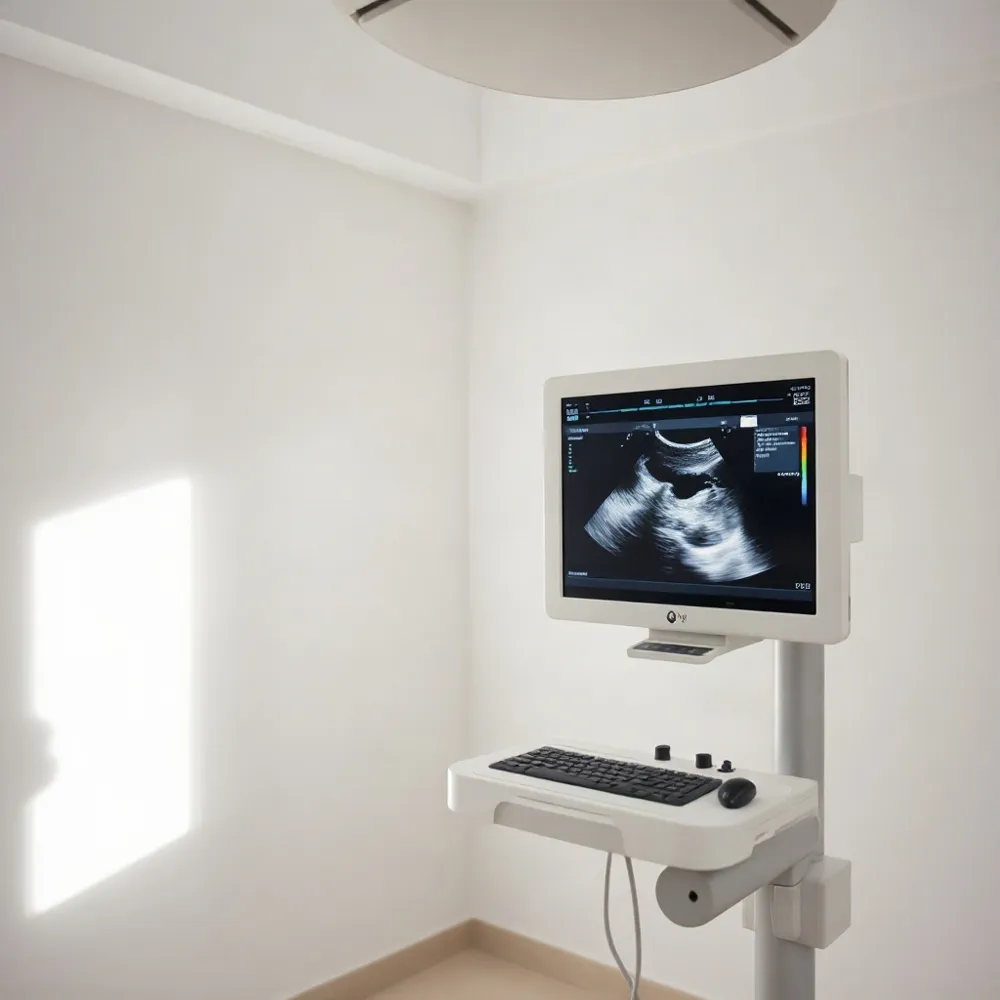
Will I have an ultrasound at my first prenatal appointment? You may, but an early scan is not necessarily part of every first visit. Your provider may suggest one based on your pregnancy timing, health history, or what needs clarification. At Raveco, a Queens obstetrics and gynecology provider can discuss how an imaging plan fits your individual care.
An ultrasound can help estimate how far along the pregnancy is and establish an estimated due date. It may also help assess early development and check whether there is more than one embryo. Depending on the reason for the scan, it may be performed vaginally and uses sound waves to create images. Learn more about when an early ultrasound may be used.
What can be seen depends partly on how far along the pregnancy is. A heartbeat may not yet be visible or detectable at a very early visit, so its absence at that point does not, by itself, explain what is happening. MedlinePlus guidance on first-trimester care notes that a heartbeat often cannot be seen or heard on ultrasound until at least 6 to 7 weeks.
Ask whether a scan is planned, what it is meant to assess, and how the findings could affect pregnancy dating or next steps. Your care team can explain what to expect in your circumstances.

Prenatal screening estimates the chance of certain conditions; it does not diagnose them. Diagnostic tests can identify many genetic or chromosome conditions, but some involve procedure-related risks. Your clinician can explain how the options differ and what a result may mean. ACOG’s guide to prenatal testing describes screening and diagnostic testing, including their limits and potential risks.
One option combines a blood test with a nuchal translucency (NT) ultrasound, generally offered around weeks 11 to 13. The blood test measures pregnancy-related substances, while the ultrasound measures fluid at the back of the baby’s neck. Together, they estimate the chance of chromosome conditions such as Down syndrome, trisomy 18, and trisomy 13. Another option is noninvasive prenatal testing (NIPT), also called cell-free DNA screening, which analyzes fragments of fetal DNA in the pregnant person’s blood and may be available from around week 10. The tests a practice offers can vary.
Carrier screening is a separate choice. It looks for inherited genetic changes that a parent could pass on to a child. If a result suggests an increased chance of passing on a condition, your provider may discuss testing a partner as well.
A higher-chance screening result does not confirm that a fetus has a condition, and further testing is not automatic. Your provider can discuss whether diagnostic testing is appropriate and what it may involve. Raveco provides comprehensive obstetric and gynecologic care in Queens, where screening decisions can be discussed in the context of your health and pregnancy circumstances.
Genetic testing is a personal choice. Consider asking what a test can and cannot tell you, how reliable its results are, what risks apply, and how the information might affect preparation or decisions about care. You can also ask whether speaking with a genetic counselor would help you understand the options. Learn more about screening versus diagnostic testing before deciding what questions to bring to your provider.
A short list can help you use the appointment for what matters most to you. Your questions may depend on your health, pregnancy history, and preferences, so you do not need to cover every topic at once. At raveco.com, prenatal care is part of comprehensive obstetrics and gynecology services focused on individual needs.
These prompts reflect topics patients can discuss during prenatal care, while recommendations vary by individual. ACOG’s prenatal care guidance encourages patients to share relevant health history and ask about recommended tests, visit timing, and whom to contact with concerns.
Keep a running list on paper or in your phone and bring it to your next appointment. Do not wait for a routine visit if a concern feels urgent. Ask how and when to reach the care team between visits, and whom to contact if you feel unwell. Questions to bring to your first prenatal visit can help you prepare for that conversation.
After the first appointment, prenatal care continues with check-ins tailored to your health, pregnancy, and preferences. First-trimester visits are often scheduled about every four weeks, but this is a common pattern rather than a fixed rule. A traditional schedule becomes more frequent later in pregnancy; ask your clinician what timing makes sense for you. ACOG’s prenatal care guidance notes that visit plans can change as health needs and pregnancy progress become clearer.
Care may combine in-person visits with telehealth when an examination or laboratory test is not needed. Some pregnancies call for more frequent monitoring or input from a maternal-fetal medicine specialist. At raveco.com, obstetrics and gynecology care in Queens is centered on individual needs, so visit planning can be discussed in the context of your health history and concerns.
Early care commonly includes reviewing your medical and pregnancy history, medicines and supplements, and checking your health. Your clinician can discuss nutrition, prenatal vitamins containing folic acid, and avoiding alcohol, tobacco, and other substances that may harm a pregnancy. Blood or urine tests, genetic screening, and ultrasound may also be recommended according to your history, preferences, and timing. The first-trimester care overview describes these as parts of prenatal care that may vary by individual.
Before you leave, ask when to schedule the next appointment, how to reach the care team between visits, and which symptoms or changes need prompt attention. Knowing whom to contact can make it easier to get guidance when a concern arises.
Your first prenatal visit is both a medical assessment and a conversation about what matters to you. It is appropriate to ask about your care options, what test results can and cannot show, how examinations will be handled, and how to reach the team if questions come up. If something feels unclear or uncomfortable, say so. Your provider can explain the next steps and discuss alternatives when available.
At raveco.com, pregnancy care is part of a broader, personalized obstetrics and gynecology practice serving Queens, New York. Wherever you receive care, contact your own prenatal team for guidance tailored to your health and pregnancy. Recommended tests, appointment schedules, and care plans can vary with your history, preferences, and clinical needs, so your provider is best placed to help you understand which choices fit your situation.


Compassionate care for every stage of womanhood. Visit one of our convenient locations or book your appointment online today.